Sunday, September 29, 2024 was supposed to be a good night for everyone who grew up with Lauryn Hill's voice in their ears.
Ms Hill, the legendary American singer behind the timeless 1996 classic Killing Me Softly, was headlining, backed by a 26-member technical team and millions of shillings’ worth of sound equipment flown in from Dubai. Then the rain came and Kenya’s sound problem was laid bare.
A downpour breached the stage enclosure, soaking the ultra-sensitive Digital Mixer Console (DMC), the centrepiece of Ms Hill’s live production. The console shut down, bringing the festival to a standstill and threatening to cancel her show entirely.
For over three hours, organisers scrambled for alternatives, piecing together outdated local consoles from across Nairobi. Against all odds, and encouraged by Ms Hill herself, they salvaged a performance.
Among those watching the chaos unfold was veteran sound engineer and entrepreneur Max Mululu, the founder of Xpose Ltd. What he witnessed that night crystallised a long-standing industry problem: The country had a chronic underinvestment in high-end sound technology. The market relied heavily on flying in equipment at crippling cost, and from that chaos, he saw a business case.
The investment gap
For years, event organisers have spent between Sh2 million and Sh5 million to hire high-end consoles from Dubai, South Africa, and the UK. Sometimes it costs more when factoring in travel, insurance, customs bonds, and technical crew.
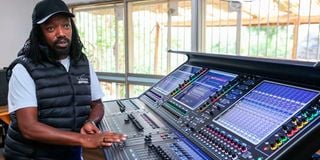
Xpose Limited sound engineers Rodgers Koome (left) and Jayson Gatebu unveil a Digico Quantum 338 mixing console at the company’s Karen headquarters on November 13, 2025.
Photo credit: Billy Ogada | Nation Media Group
“It was extremely expensive when we had to source it from Dubai for Lauryn Hill, with the total fees coming to about Sh5 million, including hiring costs,” a YDX management executive tells the BD Life.
At the Lauryn Hill festival, YDX was prepared to charter a plane to bring in a second mixer from South Africa at a cost of over Sh10 million.
To Max, the problem was simple: “How do we not have such mixers in Kenya?”
His frustration deepened after interacting with the foreign engineer who had flown in with the DMC during the Lauryn Hill show.
“It felt like he looked down on us,” Max recalls. “That bothered me as much as the failure itself.”
He left the festival determined to close that gap.
A Sh20 million leap
As Max speaks to the BDLife, two colleagues wheel in a brand-new unit into his Karen office. It is a gleaming Digico Quantum 338, one of the most advanced live sound consoles in the world.
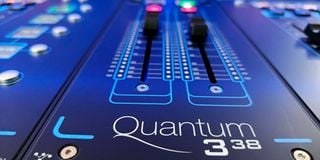
A Digico Quantum 338 mixing console on display at Xpose Limited, Karen, on November 13, 2025.
Photo credit: Billy Ogada | Nation Media Group
There are only two in East Africa; the other is in Tanzania, Max says.
The investment is enormous. Digico Quantum series consoles cost between Sh13 million and Sh31 million depending on configuration. Max’s cost him Sh20 million.
“It’s the preferred desk for 90 percent of international artistes,” Max says. “This is what Tems recently used at Blankets & Wine, what Lauryn Hill was supposed to use, and what Burna Boy’s shows run on.”
The Quantum 338 supports over 64 channels, has dual power supplies, advanced 32-bit processing, and can keep a show running 30 minutes after a power cut.
But even the world’s best console is only as good as the people running it. “We had to send our engineers to South Africa for training,” Max notes.
The business case
Sound, Max insists, is lucrative, but patience is essential.
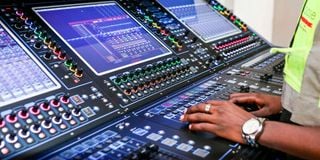
Sound engineer Jayson Gatebu operates a Digico Quantum 338 mixing console at Xpose Limited’s headquarters in Karen on November 13, 2025.
Photo credit: Billy Ogada | Nation Media Group
“Most investments take 10 to 12 years to recoup. But I expect this one to pay for itself in less than five.” He is not blind to the danger of obsolescence.
“With how fast technology moves, people might worry about obsolescence, but I’m not. The manufacturer has already designed an upgrade system that is software-based, because the console runs on a powerful processor. It’s like updating your computer’s operating system to improve performance. The hardware is built to last,” Max grins with confidence.
Hiring the console alone, without the full sound package, will cost Kenyan clients about Sh1 million per event. Max reckons its a great saving opportunity compared with the Sh2 million to Sh5 million it costs to fly similar equipment.
And because it is now locally available, Max says organisers can avoid flight and accommodation for foreign technicians; expensive customs bonds, and insurance loading for high-value equipment.
“Bringing equipment into the country, knowing it has to leave again immediately after, is complicated and frustrating. You have to deal with customs, and they require a bond, which is a percentage of the equipment’s value, as a guarantee that it will be taken back out of the country. The reasoning is that they don’t know if you intend to sell it. The paperwork alone is tedious.”
And the timing could not be better.
The September–December season is traditionally the industry’s busiest window, filled with concerts, festivals, and corporate galas.
“Sound isn’t glamorous every day,” he says. “There are dry spells. But when it peaks, it’s madness — 24 to 36 hours on the road. That’s where the money is.”
The pioneers
Kenya’s sound industry has long relied on pioneers who invested early. Twelve years ago, Live Gigs bought a Yamaha M7CL — then a revolutionary console costing Sh4–5 million.
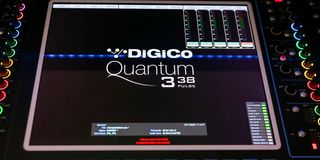
A Digico Quantum 338 mixing console on display at Xpose Limited, Karen, on November 13, 2025.
Photo credit: Billy Ogada | Nation Media Group
“They were the only ones with it in the region,” Max recalls. “Their demand was through the roof.”
But with technology moving faster, and price tags rising, many Kenyan firms slowed down on reinvestment. As a result,
technical failures became more frequent, and global artistes became harder to satisfy.
“The industry stagnated,” Max says. “If a mixer alone costs Sh20 million, imagine what a full system costs.”
Now, with the Quantum 338 available locally, Max says Kenyan organisers finally have a world-class alternative.
A few days ago, Max hosted sound engineers from Kenya, the UK, and South Africa for the console’s official unboxing. The room buzzed with excitement — and relief.
“We’re ready now,” Max says with a grin. “Next time an international artiste comes to Nairobi, we’ll be prepared.”