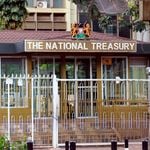
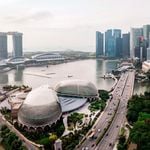
In the din of the controversy over the government’s decision to divest part of its stake in Safaricom, fundamental questions have been oddly muted: How exactly will the proceeds be spent, and who will authorise that spending?
Is the proposed infrastructure fund the product of a coherent, long-term national investment strategy, or is it simply being improvised to warehouse cash from the Safaricom transaction and the planned privatisation of the Kenya Pipeline Company? Where, in fact, did this idea originate?
Recently, in search of clarity, I reached out to a contact at the National Treasury for an off-the-record conversation. He declined—only to later send me by email a document titled By Generations, For Generations: 50 Years of Temasek.
Temasek Holdings, Singapore’s sovereign investment holding company, is widely credited as one of the institutional innovations behind the country’s dramatic economic rise.
When you zoom out—when you listen to President William Ruto’s recent public statements about creating a sovereign wealth fund, when you review proposals for an infrastructure fund, and when you digest the drastic structural changes introduced by the newly enacted Government Owned Enterprises (GOE) Act—the conclusion becomes difficult to escape: the current push to divest from large, profitable State enterprises and channel the proceeds into an infrastructure fund mirrors, almost point-for-point, the logic that led Singapore to create Temasek Holdings.
It is the same logic behind President Donald Trump’s 2024 statement that he would use revenue from tariffs to create a sovereign wealth fund for roads, airports, and defence technologies. Around the world, governments confronted with fiscal pressure increasingly view sovereign funds and state-holding companies as tools for development.
But the clearest signal that Kenya is trying to imitate the Temasek model came when the President assented to the GOE Act, 2025. What is the significance of this legislation in the changes unfolding before us?
The centrepiece of the new law is simple but transformative: it repeals the Acts of Parliament that created most of our commercial parastatals. We once had the KPA Act, the KenGen Act, the Ketraco Act, and many more. All of them now stand repealed.
In policy jargon, this is “corporatisation”—the deliberate conversion of state-owned enterprises from statutory bodies created by specific Acts of Parliament into companies incorporated strictly under the Companies Act.
The government remains the owner, but only through shares, not statute. In this new structure, the State exercises influence through boards, not through ministers.
The implication is profound: corporatisation quietly unlocks large-scale asset monetisation without Parliament having to vote on each sale. It becomes the legal on-ramp for fast-tracking privatisation.
The pathway to selling equity becomes automatic and administratively streamlined.
If this is the road Kenya has chosen, then the country deserves an open, candid debate—not the shallow shouting match that currently dominates the airwaves. Temasek’s experience offers both inspiration and caution.
Temasek did the hard work first. Singapore stripped ministries of all direct control over commercial enterprises. Ownership was consolidated into a single shareholder: the State acting strictly as an investor, not a political operator. Performance—measured ruthlessly—became the organising principle.
As Kenya enters the public participation period on the Safaricom divestiture and infrastructure fund proposal, we must elevate the quality of debate. The key question is not whether divestiture is good or bad. It is: What exactly is this infrastructure fund?
Is it being set up as a serious, independently managed national investment institution? Or is it merely a temporary parking bay for windfall proceeds from one-off asset sales?
We must revisit the intellectual and legal origins of Kenya’s Sovereign Wealth Fund (SWF) idea. The first Sovereign Wealth Fund Bill of 2014, drafted by the Presidential Taskforce on Parastatal Reforms, adhered closely to global best practice.
It conceived a sovereign investment institution owned by the people of Kenya, aligned with the Santiago Principles developed under the IMF. It was to be insulated from day-to-day politics, professionally governed, and accountable.
What came later was a steady dilution. Successive National Treasury teams reframed the SWF as little more than a specialised Treasury bank account at the Central Bank—established under the PFM Act and capable of being dissolved at the stroke of a Cabinet Secretary’s pen.
Which brings us back to the most consequential question of all: Who will decide how the infrastructure fund is spent? The Cabinet? Parliament? Or a professional investment board insulated from politics? Without airtight governance rules, such a fund risks becoming a large and efficient political slush fund—only this time financed by the family silver.
Kenya stands today at the same fork in the road that confronted Singapore decades ago. Do we want a serious national investment holding model built for generations? Or a convenient cashbox for whichever administration happens to be at the National Treasury.
The writer is a former managing editor of The EastAfrican
Unlock a world of exclusive content today!Unlock a world of exclusive content today!