On June 25, 2024, Kenya witnessed a moment that will be remembered for years to come.
Across cities and towns, a youthful voice rose, and it is undisputed that this Gen Z awakening was a powerful reminder that citizens expect fairness, accountability, and transparency in the management of public finances.
The moment challenged the way public policy is conceived, communicated, and executed. The protests were more than a reaction to specific tax proposals; they were a call for a new social contract, demanding that public sentiment serves as the compass guiding national decisions.
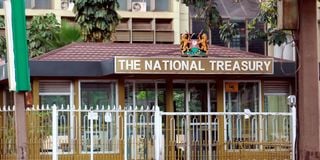
The rejection of key revenue measures forced a recalibration of Kenya’s fiscal framework. In response, the National Treasury unveiled MTP IV, 2023-27, initiating a fiscal consolidation agenda focused on broadening the tax base, reducing reliance on debt, and adopting innovative, sustainable approaches to financing national development.
This was not a mere technical adjustment but was a pivotal shift, aligning planning and resource mobilisation with economic realities and societal expectations, anchored in zero-based budgeting.
The government recognised the limits of fiscal headroom. The moment demanded decisive action that balanced prudence with innovation. From this assessment emerged a revitalised privatisation agenda.
Kenya’s development ambitions require capital volumes that borrowing and taxation alone cannot provide. Several State-owned enterprises had become persistent burdens on the Exchequer, underperforming despite repeated fiscal support.
Modernised privatisation offered a practical path to unlock dormant value, drive efficiency, and redirect resources toward transformative projects, creating fiscal space for sectors that directly impact citizens’ lives.
At this inflexion point, Kenya needed a vision grounded in courage and disciplined leadership.
The President’s State of the Nation Address on November 20, 2025, signalled precisely that. The Road to Singapore framework articulated by President William Ruto provides a benchmark for the discipline and ambition required to transform Kenya.
Singapore’s ascent rested on prudent financial management, targeted investment, and deep public trust. Kenya is embracing a similar ethos: resource discipline, long-term planning, and strategic capital allocation.
It is within this context that the State’s long-standing shareholding in Safaricom must be understood. Safaricom has been central to Kenya’s technological and economic ascent, delivering consistent dividends and bolstering national development.
Yet the current context requires a shift. Responsible stewardship sometimes necessitates releasing value to redirect it where it can generate the greatest national impact. The decision to partially divest the government’s stake in Safaricom reflects a measured, strategic transition.
This decision is neither abrupt nor politically motivated. It is informed by a sober evaluation of national priorities, fiscal constraints, and critical infrastructure needs. Kenya’s economic fundamentals remain solid, with projected growth of 5.3 percent in 2025.
Fiscal pressures, however, are significant. Public debt stands at about Sh10.6 trillion, or 68 percent of the gross domestic product. More than half of all tax revenue is consumed by debt servicing, limiting investment in healthcare, education, social protection, climate resilience, and essential infrastructure.
A responsible state cannot rely indefinitely on debt to finance development. Sustainable prosperity demands innovative, disciplined, and strategic fiscal choices.
The partial divestment from Safaricom is designed to unlock value and channel it to sectors with the highest multiplier effect. Kenya requires more than Sh 1.8 trillion in new infrastructure investment over the next five years to advance the Bottom-Up Economic Transformation Agenda.
Roads, water systems, energy grids, digital infrastructure, and industrial parks form the backbone of a modern, competitive economy. Traditional financing has reached its limits and must be complemented through alternative mechanisms.
The Government is strengthening instruments that attract private capital while safeguarding national interests.
These include Public-Private Partnerships, blended finance models, and capital deployment through the twin funds: The National Infrastructure Fund and the Sovereign Wealth Fund. Resources released through divestment will be catalytic, enabling layered co-investments by local and international partners.
The aim is to translate fiscal prudence into productive power and turn disciplined financial management into tangible economic outcomes.
The partial divestment also responds directly to concerns Kenyans have voiced about the cost of living, public debt, and accountability. The Government has listened. It has chosen a path that expands domestic capital mobilisation, empowers local investors, and strengthens national ownership of development projects.
This approach signals a new public finance philosophy anchored in transparency, efficiency, and responsiveness to citizens.
Proceeds from the Safaricom divestment will flow transparently through the National Infrastructure Fund, complemented by the Sovereign Wealth Fund to preserve part of the value for future generations.
The Infrastructure Fund will invest in projects that expand opportunity, integrate markets, and strengthen competitiveness. Both Funds operate under robust governance and accountability frameworks to safeguard public value, and Parliament will ensure this.
Kenya’s progress has historically depended on citizens, institutions, and the private sector acting in concert.
The partial divestment is an invitation for all stakeholders, pension funds, county governments, diaspora communities, private investors, and citizens, to participate in building a resilient, competitive nation. The aim is to generate prosperity through shared responsibility and sustain it through disciplined national investment.
Kenya is not stepping back from past achievements. It is repurposing its successes to unlock new frontiers of opportunity.
The divestment represents a deliberate act of national renewal, aligning prudent financial management with long-term ambition. The moment for decisive action has arrived, and we must seize it with unity, resolve, and purpose.
The writer is the Cabinet Secretary, The National Treasury
Unlock a world of exclusive content today!Unlock a world of exclusive content today!