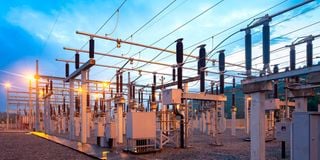
Kenya is entering a defining moment in its infrastructure journey. The demand for modern transmission lines, logistics hubs, public housing, digital infrastructure and integrated mobility systems is rising faster than ever.
Yet the country’s fiscal constraints and rising debt-servicing costs mean that the traditional model, where government borrows and builds is no longer sustainable. This is not unique to Kenya; it is a reality facing many emerging markets. But within this challenge lies an opportunity.
The next phase of Kenya’s infrastructure transformation will be built through well designed Public–Private Partnerships (PPPs). PPPs offer a practical model for delivering essential public assets by mobilising private-sector capital and expertise, while ensuring that projects remain publicly purposed and publicly anchored.
However, PPPs do not succeed simply because the model exists. They succeed when they are well structured, well governed and widely trusted. This is where Development Finance Institutions (DFIs) must now step into a leadership role.
DFIs are uniquely positioned to guide Kenya’s PPP evolution for several reasons. First, they bring credibility into a politically sensitive space. The single biggest barrier to PPP adoption has rarely been technical capacity; it has been public perception and political trust.
PPPs are often misunderstood as a form of privatisation by stealth, especially when citizens fear higher tariffs or opaque contracting. Because DFIs are neutral, transparent and mandate-driven institutions with stringent governance standards, their involvement can immediately shift sentiment.
When DFIs anchor PPP structures, they introduce predictable procurement frameworks, enforce transparency and accountability, set clear value-for-money principles, and apply strong environmental, social and governance safeguards. These elements are essential for building widespread public acceptance.
Second, DFIs have deep expertise in structuring risk appropriately. PPPs often fail when risk is allocated to parties who cannot manage it effectively.
DFIs, through decades of experience across global markets, understand how to design blended finance structures, deploy guarantee mechanisms and create balanced risk-allocation frameworks.
Their involvement allows PPPs to be bankable, to protect the public interest, to mobilise private capital confidently and to remain affordable and sustainable over the long-term.
Third, DFIs can unlock Kenya’s substantial pool of local institutional capital. With over Sh2.5 trillion in assets under management, the pension industry represents patient, long-term capital that can be directed toward national infrastructure.
Yet pension funds are understandably cautious and will not make the first move unless a credible institution reduces early-stage uncertainty.
A DFI-anchored PPP pipeline can provide first-loss protection where appropriate, offer partial risk guarantees, establish long-term tariff or availability-based payment frameworks, strengthen governance oversight and ensure robust monitoring and evaluation. Such a structure gives local investors confidence to participate in nation-building.
Fourth, DFIs are capable of unifying policy, financing and market confidence. Kenya already has a strong PPP Act and an evolving regulatory environment. What is missing is an institution that can sit at the centre of the ecosystem; where policy, project preparation, financing and private-sector mobilisation converge and ensure that the pipeline is cohesive, consistent and executable. By mandate, DFIs are designed to perform exactly this bridging function.
Finally, PPPs need a champion who can help create widespread public acceptance. Kenyans care deeply about service delivery, transparency, fairness and affordability.
DFIs can design PPP frameworks that embed clear social-impact metrics, affordability safeguards, transparent tariff-setting formulas, performance-based payment structures and open contracting principles. When these elements are in place, PPPs become pro-citizen rather than anti-citizen. They gain popular support.
If Kenya is to achieve large-scale infrastructure transformation without expanding its debt burden, PPPs must move from the margins to the mainstream. That transition requires leadership grounded in financial innovation, policy alignment, governance discipline and public trust.
DFIs are uniquely equipped to play this role. By stepping forward, DFIs can help Kenya build infrastructure that is financially sustainable, publicly accepted, climate-aligned, socially equitable and institutionally sound.
This is no longer simply about financing individual projects; it is about shaping a new infrastructure development model for the country. The institutions bold enough to lead this shift will define Kenya’s trajectory for the next generation.
The writer is Chief Capital and Development Officer, Centum Real Estate.