Kenya’s development planning history spans over six decades, evolving from short-term cycles to a transformative long-term vision.
Since independence, the country has relied on five-year development cycles, beginning with the National Development Plan (1966–1970) and foundational policy documents like Sessional Paper No 10 of 1965 on African Socialism and its Application to Planning in Kenya, which prioritised reducing illiteracy, poverty, and disease.
Subsequent strategies included Sessional Paper No. 1 of 1986 on Economic Management for Renewed Growth and Sessional Paper No. 2 of 1996 on Industrial Transformation to the Year 2020, which laid the groundwork for sectoral focus and structural reform.
The Economic Recovery Strategy for Wealth and Employment Creation marked a turning point, stabilising the economy and conceptualising what is now called the Vision 2030 in 2008.
This long-term blueprint aimed to transform Kenya into “a newly-industrialising, middle-income country providing a high quality of life to all its citizens in a clean and secure environment” through three pillars: economic, social, and political, anchored on enablers and macros.
As Kenya nears the completion of Vision 2030, currently being implemented through the Fourth Medium-Term Plan, various critics have argued that the once ambitious blueprint has not fully delivered on its promises to citizens.
However, since its launch in 2008, Kenya has recorded notable progress across several sectors, specifically in infrastructure.
Infrastructure is a critical enabler identified in the Vision 2030, essential for raising productivity, facilitating trade, and supporting growth across all pillars. Key infrastructure sectors include roads and transport, energy and petroleum, information and communication technology and digital economy.
Kenya has made tremendous progress in enhancing its infrastructure over the years. Under the expansion of road programmes, paved roads have doubled between 2007 and 2024 from 9,293 kilometres to 25,410.69 kilometres.
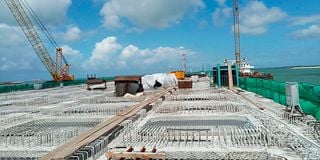
Under the multimodal Lamu Port South Sudan Ethiopia Transport (Lapsset) Corridor project, three berths at the Lamu port have been completed and have become operational, marking a key milestone in regional integration and trade facilitation.
The transport sector includes the construction of a standard gauge railway (SGR) from Mombasa and improvements and rehabilitation of metre gauge railway (MGR) links to urban centres, which is still going on, with Miritini MGR Station–Mombasa terminus completed, the MV Uhuru II wagon ferry, and works along the Riruta-Lenana-Ngong line progressing.
Additionally, plans are underway to expand SGR to Kisumu and to Malaba.
Efforts to expand digital infrastructure and increase Internet penetration are ongoing through the connection of urban areas to the National Optic Fibre Backbone Infrastructure, in line with the digital economy strategy. Notably, internet penetration has realised steady growth from less than five percent in 2007 to 40.8 percent with more than 22 million users.
The completion of Phase One of Konza Technopolis’ horizontal infrastructure has marked the beginning of Kenya’s journey toward building Africa’s smartest city. Related developments, which are complete in this smart city, include the Konza Data Centre, the Kenya Institute of Advanced Technology and the establishment of the Open University of Kenya.
In the energy sector, Kenya’s total installed electricity-generating capacity, according to the Economic Survey 2025, stood at 3,235.5 megawatts in 2024, from 1,196 megawatts in 2007, reflecting sustained investment in energy infrastructure and diversification of generation sources.
The Last Mile Connectivity Project has continued to expand access to power, with 9.7 million customers connected since its inception.
To ensure the success of Kenya’s flagship infrastructure projects, bold strategies are needed. Leveraging public-private partnerships and innovative financing will bridge the $4 billion annual funding gap and ease reliance on public debt. Credit enhancement facilities will boost project bankability, while timely land dispute resolution will minimise delays.
Vision 2030 isn’t just a blueprint—it’s a commitment to building a sustainable, prosperous future for all Kenyans.
The national transmission infrastructure stood at 3,408km circuit length before 2008, it is now at 9,484 km circuit length while 3,281km circuit length is under construction which is done Under the Kenya Transmission Network Improvement Project.
One of the key flagship here is Kenya–Ethiopia Interconnector linking the power systems of Kenya and Ethiopia through a high-capacity transmission line which has been extended to Tanzania.
Under improvement and construction of new stadia, construction of the 60,000-capacity Talanta Stadium under a Public-Private Partnership (PPP) framework is underway with Nyayo and Kasarani improved as kenya prepares to host AFCON 2027.Additional stadia currently undergoing facelift like Ithookwe, Raila Odinga,Kiprugut Chumo ,Kipchoge keino,Ruringu,and Bhukungu reflect the government’s commitment to promoting sports infrastructure.
In the maritime sector, the construction of Shimoni Port has been completed, boosting shipping and maritime trade capacity. Meanwhile, efforts to modernize aviation facilities is in progress, with the Kisumu Airport Control Tower nearing completion and negotiations ongoing for a new terminal at Jomo Kenyatta International Airport (JKIA) under a PPP arrangement.
Under the Affordable Housing Programme (AHP), more than 9,000 housing units have been completed, while an additional 162,000 units are currently under construction. These include notable projects such as the 1,080 social housing units at the Mukuru Meteorological site in Nairobi, the Pangani AHP project, and the Embu Civil Servants Estate, among others.
This progress underscores the government’s sustained commitment to expanding affordable housing and promoting urban renewal across the country.
In the water and irrigation sector, significant progress has been made with the construction and expansion of key infrastructure.
Major flagship projects such as the Thwake, Mwache,Karimenu II, Londiani,koru Dam, Bosto, and High Grand Falls Dams remain under construction ,completed or in various stages of negotiation. These initiatives have exemplified government role in implementing vision 2030 priorities and in line with 5 year cycles plans including the big four Agenda and the BETA.
As Kenya advances its flagship infrastructure projects, several challenges must be addressed to ensure success. These include the need for a clearer project selection framework, strengthened institutional capacity, and innovative financing to bridge funding gaps.
Improved coordination among agencies, streamlined legal and regulatory processes, and strategic land-use planning with fair compensation are also essential. Tackling these issues will enhance efficiency and accelerate the realization of transformative national Long-term priority projects.