The High Court this week quashed the Sacco Societies Regulatory Authority (Sasra) guidelines that had compelled saccos to start making provisions on the billions of shillings invested in Kenya Union of Savings and Credit Co-operatives (Kuscco).
The directive, issued mid-January 2025, came after a forensic audit revealed Kuscco suffered a Sh13.3 billion heist under the watch of former officials who have since been charged in court.
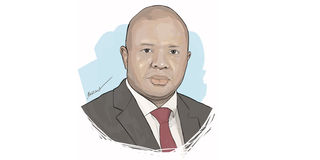
Sasra acting CEO David Sandagi spoke to the Business Daily on his reading of the court’s judgment and the way forward for the sector, given that the International Financial Reporting Standards (IFRS) are applied globally.
What is your reading of the court’s decision to quash Sasra’s guidelines on making provisions following the discovery of fraud at Kuscco?
That is the position of the law in interpreting our guidance note, and we respect it. At the end of the day, the Statutory Instruments Act requires statutory instruments, as defined, to be canvassed in a manner that befits what public participation ought to be.
Where does this judgment leave the sector, given that IFRS 9 is global and this standard is one of its guidelines to the accounting profession when making decisions and preparing financial reports?
Our guideline was just an emphasis of the IFRS 9—a standard which cannot be waived. We are talking about the standard on ensuring fair statement of assets in financial statements are made.
In the context of finance professionals, whose practice is dictated by standards and law, they cannot stop using the standard.
There is the interpretation through the courts about the accounting and reporting standards, and there is the expectation of directors in ensuring that the firms they oversee prepare and provide financial statements that reflect a true and fair view.
What are the next steps now?
Reporting standards go beyond just impairment. Even for comparison, when we want to compare how the sector in Kenya is performing versus Canada, we rely on IFRS for comparisons. Our engagements with saccos will continue. The standard exists, and the law exists. I don’t want to reinterpret a judgment, but I want to state that the financial reporting standards remain standard.
And maybe what that [court judgment] could imply is that whereas there was an agreed-upon period [from Sasra] where these impairment losses would be recognised, it would hit saccos a bit harder because they would now be required to make a one-off impairment provision in line with IFRS 9.
Sasra came under criticism for issuing the guidance for staggered provisioning as opposed to one-off provisioning in line with IFRS 9. Was your guideline a misstep right from the beginning?
Not really. That [one-off provisioning] would have left so many saccos in challenges if they were to do that.
Regulators come in to guide the methodology of adopting standards. As regulators, we have the responsibility to assess the status of the industry and provide a certain path that does not expose the industry to many more macroeconomic risks.
It is our prerogative to ensure stability. So, it was about assessing the realities and making reasonable trade-offs. For instance, right now we are required to have adopted IFRS S1 (General Requirements for Disclosure of Sustainability-related Financial Information) and IFRS S2 (Climate-related Disclosures), but it is phased.
What will be your take on any sacco that may deem this judgment as something that tells them not to make provisions as is required by IFRS 9?
The standard has not been waived. The judgment has nothing to do with the standard. It has everything to do with our guidance note. The standard remains. The law remains.
It is not just about Kuscco. It is about the impairment losses and the requisite accounting treatment that the industry ought to comply with in terms of standards, laws, policies and regulations.
Finally, provisioning does not mean that when saccos are eventually able to realise returns from their investments — such as inflows generated from those investments— they are forfeiting those assets. In other words, making a provision does not mean letting go of the investment.
There are activities that the ministry [of co-operatives] is pursuing to help bring back and steady Kuscco. It is not a lost cause. It’s not a write-off and forget situation. When conditions improve, saccos have a chance to book the money back in their books—again in line with the standard.
How will you handle saccos that read this judgment to mean no provisioning for the Kuscco hit?
The point is that the reporting standard, the legal requirements and the legal expectations of the board of directors are not as discretionary as they would be made to appear.
The sacco business is not a Shylock arrangement. There are very clear tenets, and they will guide how we interact beyond this judgment. At the end of the day, the law remains as is, and the standard has not been waived.
Some entities have already made 100 percent provisions, and their boards are comfortable with the decisions that they made from their level of assessment of the likelihood of loss from Kuscco and other transactions.
We are not opposing the judgment. This will accord us an opportunity to engage while acknowledging that the standard and the law remain. Some entities have made 100 percent provisions from their level of assessment of likely losses, and their boards are okay with it.
The judgment does not contradict the standard. It leaves it to the leadership of the board and management of each sacco to assess and make provisions in line with the standard. And the standard says ‘one-off.’
So it cannot be that saccos won’t apply it.
In Kenya, we are also guided by the Accountants Act, the Sacco Societies Act and the International Financial Reporting Standards.
The determination of whether an asset is likely to generate future cash inflows — and consequently, whether it should be impaired — is not a vague or subjective exercise. It is guided by clear criteria. An entity cannot continue to recognise an item as an asset for years when it no longer meets the definition of an asset, particularly in terms of its ability to generate cash flows and satisfy other recognition criteria.
Given the vibrancy of Kenya’s sacco movement in Africa and globally, what measures are being implemented to ensure the sector remains competitive and aligned with financial best practices?
We are coming to a place where, through the ministry and the guidance and leadership of the Cabinet Secretary [Wycliffe Oparanya], the focus is to strengthen the regulatory standing of Sasra as well as the compliance levels within the sector.
We are talking about a country with the largest sacco sector in Africa and the seventh in the world. We need to ensure we fully comply with all overarching reporting standards, including sustainability. As we head there, we have a roadmap through the Institute of Certified Public Accountants of Kenya.