Transporters and clearing and forwarding agents have threatened to down their tools, if shipping lines and the Kenya Ports Authority (KPA) fail to address congestion at various container freight stations (CFSs) and container depots in seven days.
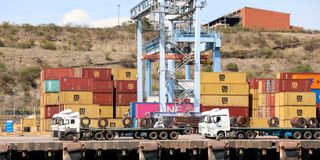
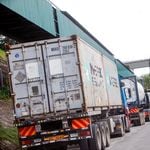
At multiple CFSs, long queues of trucks loaded with empty containers are waiting to be offloaded as depots struggle with serious congestion caused by a lack of container repatriation.
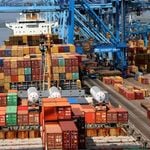
Many shipping lines have opted to prioritise picking up exports while leaving behind empty containers at a time, when the port of Mombasa is experiencing an influx of cargo due to the festive-season peak and cargo being diverted from Dar es Salaam following the just-concluded General Election in the neighbouring country.
As a result of the congestion, transporters have introduced a Sh38,000 per truck inconvenience fee. Clearing and forwarding agents are also threatening to down their tools, a move that would further disrupt the supply chain.
According to Kenya International Freight and Warehousing Association (Kifwa) National Secretary Musa Mbira, the port of Mombasa has for months been overwhelmed by a surge in containers, worsened by vessels diverting from Dar es Salaam.
He said that efforts to urge KPA and shipping lines to coordinate sweepers (special vessels to mop up containers) have been unfruitful.
“We have asked the national government to intervene and sort out the current congestion at the port and CFSs. If this persists, we shall take measures, even downing our tools to totally disrupt the supply chain at the port of Mombasa,” warned Mr Mbira.
During a stakeholders’ press briefing in Mombasa, Mr Mbira also challenged the Kenya Maritime Authority (KMA) to compel shipping lines to comply with shipping directives to offer the same waivers, saying refusal undermines the entire relief effort.
“We appreciate KPA and Kenya Revenue Authority (KRA) for honouring the agreed 100 percent waivers on storage and customs warehouse fees. Unfortunately, shipping lines have refused to offer the same waivers,” said Mr Mbira.
Mombasa Kifwa chairman Rajab Hamisi accused shipping lines of delaying documentation, imposing arbitrary charges, demanding huge deposits and penalising agents for delays caused by their own depots.
“While same shipping lines comply fully with regulations in Tanzania, here in Kenya they act with impunity, even diverting our transit business. We call on the government and regulatory agencies to act firmly and protect Kenyans from these abuses. If the situation continues, we will be forced to charge shipping lines for delays caused by their own inefficiencies,” said Mr Rajab.
Transporters and clearing and forwarding agents are also engaging the County Government of Mombasa for space, where they can deposit containers that shipping lines refuse to accept, allowing the lines to collect them at their own cost and time.
Last week, KMA Director-General Omae Nyarandi raised concerns over the ongoing congestion and issued several directives to protect traders.
Mr Nyarandi said that to reduce the cost of returning empty containers, the authority has directed shipping lines to stop charging delay fees on any container delayed from being repatriated once it arrives at the designated container depot.
“Demurrage charges shall cease to accrue once it is confirmed that an empty container is ready at the designated drop-off depot but cannot be offloaded due to capacity constraints at that depot,” said Mr Nyarandi in a notice to shipping lines dated November 7.
On the inconvenience fee, Kenya Transporters Association (KTA) chairman Newton Wang’oo said the charge will apply as a truck demurrage or truck detention fee per day, to the contracting clearing agent or freight forwarder whenever trucks are held due to congestion or refusal of containers at shipping-line-designated depots.
Mr Wang’oo said transporters returning empty containers to the designated depots are routinely finding these facilities operating at full capacity and unable to receive additional containers.
“There has been a serious congestion at the port and different CFSs resulting to operational consequences which include immobilisation of trucks still loaded with shipping line containers, inability of transporters to offload containers and redeploy their trucks, and accumulation of substantial truck delays and financial losses attributable to circumstances beyond the transporter’s control,” said Mr Wang’oo.
He added: “The new fees introduced are as a result of inconveniences since truck owners are in business and it’s just a part to cushion them against losses.”
Mr Wang’oo said transporters shall not bear the financial burden arising from congestion at empty container depots or from any failure by shipping lines to provide a legally compliant and operational return location for their containers.
The chairman said the clearing agents’ inability or unwillingness to compel shipping lines to accept liability shall not, under any circumstances, be transferred to transporters.
“The advisory is issued to safeguard transporters from unjustifiable operational, financial, and legal losses and exposure," he said.
Shipping lines are obligated to fulfil their contractual duties, and clearing agents/freight forwarders are required to ensure that liability is directed to the appropriate responsible party.
The association has urged CFSs to maintain comprehensive documentation of attempted deliveries, including photographs, timestamps, entry logs, and any written or verbal rejection notices issued by the depot.
“We urge owners of depots to communicate all such delays and related incidents promptly and formally to the contracting party, ensuring that written records are preserved for evidentiary purposes,” said Mr Wang’oo.