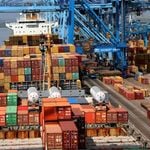
Mombasa port is falling behind its sub-Saharan African peers in operational efficiency, according to the latest Container Port Performance Index (CPPI) 2020-24 World Bank report.
The report, released in conjunction with S&P Global Market Intelligence, benchmarks 403 global ports based on how quickly container ships are turned around. It ranks Mombasa 375 globally in 2024, with a CPPI score of –89. Over the five years assessed, the report notes that Mombasa recorded CPPI values of –31 (2020), –11 (2021), –81 (2022), –32 (2023), and –89 (2024).
According to the World Bank, the CPPI reflects time efficiency at container ports, enabling ships to achieve fuel and emissions savings. Consistent negative scores signal persistent inefficiencies in vessel turnaround and congestion.
However, the dismal performance was attributed to challenges common across ports in the region.
"Sub-Saharan Africa continues to face persistent structural challenges, including limited automation and weaker hinterland connectivity. The Red Sea crisis added further strain in 2024," the report stated in part.
In neighbouring Tanzania, Dar es Salaam port performed slightly better. The report shows that the port recorded a CPPI of –176 (2020), –72 (2021), –80 (2022), –53 (2023), and –53 (2024).
Although still in the lower tier globally, Dar es Salaam port has shown more stability than Mombasa port.
“Independent of developments over time, ports in low-income countries, including most ports in Africa, are more likely to show lower port performance. This can be partly due to lower technological, human, and institutional capacities,” says the report.
At a recent event in Mombasa, President William Ruto acknowledged the need to match increased cargo capacity with infrastructure at the port. He disclosed that the government has allocated Sh41 billion for the expansion of Mombasa port.
The port is targeting more than 2.4 million twenty-foot equivalent units (TEUs) this year, up from two million TEUs at the end of 2024. Kenya Ports Authority (KPA) intends to expand Terminal 19 after demolishing the old Kipevu oil terminal.
KPA Managing Director William Ruto said the management is also working with container freight station (CFS) owners to expand their facilities to handle more cargo, noting that they have remained unchanged for two decades despite increasing flow.
“Apart from port expansion, we are working with other stakeholders, including CFSs, to expand their facilities to accommodate increasing cargo throughput in the country,” he said.
The World Bank said West African ports, by contrast, are showing strong progress.
Dakar, Senegal, has recorded one of the largest efficiency gains in sub-Saharan Africa.
The port’s CPPI value rose from –82 in 2023 to 23 in 2024, while the number of port calls also increased. With this improvement, Dakar is the highest-ranked port in sub-Saharan Africa in 2024.
The report further indicates Cotonou, Benin, was one of the fastest improvers, rising from –243 in 2023 to –17 in 2024. Lagos, Nigeria, however, remains weak with a CPPI of –24.2 in 2024 compared to –16 in 2023.
Southern Africa delivered mixed results. Cape Town was among the lowest-ranked globally in 2024 with a CPPI of –281, though it also recorded one of the largest year-on-year improvements, up from –519. Durban continued to struggle, falling to a CPPI of –721 in 2024 from –206 in 2023.
The report explains that the CPPI of Durban and Cape Town is significantly affected by longer waiting times at anchor, while the time at berth has not changed substantially between 2023 and 2024.