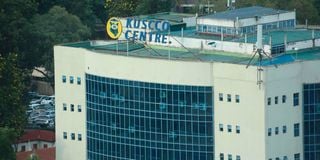
The Kenya Union of Savings and Credit Co-operatives (Kuscco) has issued compensation of Sh152.4 million to saccos after offloading non-core assets and stepping up loan recoveries, marking the latest phase of its effort to refund co-operatives facing a major loss in the financial heist.
The umbrella body of saccos says the amount builds up on Sh216.9 million paid out last year and brings the total compensation to the affected saccos to Sh369.3 million.
Saccos had invested billions of shillings in Kuscco, but a forensic audit made public early in the year revealed the entity suffered a Sh13.3 billion heist under the watch of former officials who have since been charged in court.
Kuscco targets to recover at least 70 percent of the Sh8.8 billion principal amount that Saccos had invested in the umbrella entity within the next three years and has, for the start, relied on the sale of non-core assets, auctions, and loan recoveries to process the refunds.
The latest payout includes Sh112 million as fixed deposit compensation, which has seen 116 saccos receive between Sh9.23 million and Sh1,680 depending on how much they had invested.
In addition, Sh35.4 million has been paid out to individuals who had invested money in the Kuscco Housing Fund for the purchase of houses. A further Sh5 million has been distributed to those who had saved money under the Front Office Savings Activity account called Kusasa.
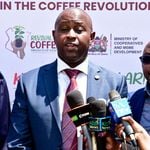
“We are releasing this money after the PricewaterhouseCoopers verified that indeed these are genuine claims. You will see us sustain, if not step up these payments, as we move forward,” said Arnold Munene, managing director at Kuscco, in an interview.
“The payment demonstrates that our initiatives to dispose of non-core assets, auction houses of defaulters, and implement cost-cutting measures at Kuscco are for the good of the sector.”
The top five recipients from the latest distribution are Hazina (Sh9.23 million), Njiwa (Sh9.23 million), UN Sacco (Sh7.58 million), IG Sacco (Sh7.56 million), Ndege Chai (Sh5.35 million), and Mhasibu Sacco (Sh4.39 million).
Kuscco sold over 32 vehicles, reduced the number of branches to five from 17, and trimmed the staff size to 79 from 250. Mr Munene said these initiatives have helped generate money and also cut operating costs.
Kuscco and Sacco industry officials are in Mombasa for the Kuscco Annual Leaders’ Summit. The launch of the summit was by Cooperatives and Micro, Small and Medium-sized enterprises cabinet secretary Wycliffe Oparanya, who said the target is to have saccos receive all their investment back.
“This fiscal distribution is part of the journey to ensure that saccos receive their principal investment held at Kuscco. This refund, calculated on a prorated basis, inaugurates a renewed covenant of transparency for the entire cooperative movement,” said Mr Oparanya.
“The funds were derived from the sale of non-core Kuscco assets and the resolute pursuit of recovery against loan defaulters who ignored legal processes. This refund demonstrates that integrity is our non-negotiable, immutable foundation.”
Last year, Kuscco paid out Sh216.9 million —mostly to small saccos. Out of this amount, Sh132.2 million was towards partial settlement of fixed deposit savings, while Sh84.7 million went to repaying investments in the Kuscco Housing Fund (KHF).
Kuscco is betting on several initiatives, including the sale of a 60 percent stake in Kuscco Mutual Assurance —the insurance subsidiary— to recover more money.
Other initiatives include the auction of houses and land held by defaulters of mortgages issued under the KHF and the recovery of loans from saccos who had defaulted on payment.
Continued recovery will see the payout hit about 70 percent in three years and rise to the entire saccos’ principal investment in the Kuscco by the fifth year, according to an earlier plan shared by the entity.
Kuscco is currently auctioning houses and parcels of land valued at about Sh1.7 billion in the hands of 684 individuals who have defaulted on loans issued through its housing fund.
The Kuscco heist prompted the intervention of the government to avoid the collapse of the country’s co-operative movement that holds over Sh1 trillion deposits.
Mr Oparanya said his ministry extended the term of the interim board of Kuscco for a term of two years to give them ample time to develop and implement a recovery strategy, reconstruct the books of accounts, oversee statutory and forensic audits, and amend the union’s bylaws.
He has been pushing for the merger of small co-operatives in order to strengthen their operations and also ensure closer supervision to avoid governance lapses.