Time flies with great content! Renew in to keep enjoying all our premium content.
Prime
Kenya malaria cases surge as global funding crisis deepens
The WHO attributes the increase in malaria transmission to a severe global funding cut, which halved globally, from $879.4 million (Sh113.7 billion) to $439 million (Sh56.8 billion).
Reported malaria cases in Kenya increased by 27 percent last year, pushing the country higher in global disease burden rankings, a new global report shows.
An annual report by the World Health Organisation (WHO) shows that Kenya recorded 4,186,000 cases in 2025, up from 3,294,000 in 2024 – an additional 892,000 cases that moved Kenya to position 23 globally from 21, and from position 21 to 20 within Africa.
The WHO classifies Kenya as a high-burden country for malaria, with the disease remaining endemic and posing a significant public health challenge throughout 2024 and into 2025.
This dramatic surge occurred despite numerous malaria interventions put in place during 2024 to contain transmission.
During that year, Kenya carried out a national insecticide-treated net (ITN) campaign, implemented Indoor Residual Spraying (IRS) under the ITTP programme, expanded Seasonal Malaria Chemoprevention (SMC), and continued the rollout of the malaria vaccine in endemic counties.
The increase has raised Kenya's share of the global malaria burden from 1.3 percent in 2023 to 1.5 percent currently, with the country now accounting for 5.7 percent of total estimated malaria cases globally.
Among children under five, Kenya's contribution has similarly risen to 1.5 percent, representing millions of young lives affected by a preventable disease.
The WHO attributes the increase in malaria transmission to a severe global funding cut, which halved globally, from $879.4 million (Sh113.7 billion) to $439 million (Sh56.8 billion), reflecting the absence of US country-level allocations in 2024.
Earlier in the year, the US administration paused foreign aid, impacting global health programmes such as Pepfar and leading to legal challenges through an executive order, which also saw the US withdraw from the WHO.
The executive order also paused transfers of US funds to the WHO and recalled US personnel working with the organisation, citing mishandling of the Covid-19 pandemic, failure to adopt reforms, and political interference from member states.
“Total malaria funding decreased by about 50 percent between 2015 and 2024, from $879 million to $439 million, marking one of the sharpest contractions in global malaria investment in the last decade. This reduction has created serious gaps in prevention, diagnostics, and treatment financing, particularly in high-burden countries that rely heavily on external support,” said the WHO.
The UN health agency also identifies climate change as a major contributor to escalating transmission, as shifting rainfall patterns and rising temperatures expand mosquito breeding habitats, increasing infection rates in areas previously considered low-risk or malaria-free.
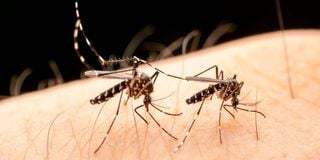
Similarly, extended rainy seasons in 2024, combined with flooding in several regions, created ideal breeding conditions for Anopheles mosquitoes – the vectors that transmit malaria.