For thousands of Kenyan men who survive prostate cancer each year, one of the most difficult and less talked about struggles is how the treatments often leave disruptions to their sexual health: erectile dysfunction, low desire and a fragile sense of masculinity.
Some would argue that “sex is not something that is an absolute requirement for living,” but more doctors and survivors are now keen on the quality of life after the disease.
Prostate cancer treatment forces patients to make tough decisions; to part ways with their prostate if they are to save their body, and their sexuality changes.
Luckily, doctors say, prostate cancer is an “old man’s disease” that, on global averages, occurs in men above 70. However, Kenyans as young as 45 have been diagnosed with it.
Dr Carrey Abonyo, a urologist at the Kenyatta University Teaching, Research and Referral Hospital (KUTRRH), says men should not be afraid of prostate cancer treatment because of concerns over sexual health, because this can be treated after the cancer is gone.
Dr Carrey Abonyo, a urologist at the Kenyatta University Teaching, Referral and Research Hospital, during an interview on November 27, 2025.
Photo credit: Elvis Ondieki I Nation Media Group
“There’s a wide range of options,” he says. “But first you have to get well.”
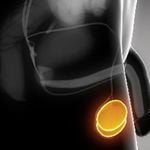
So, what is the prostate, and why does it change a man’s sexuality once it is targeted?
“It is a gland which is located in the pelvis; that is, in the lower part of our body, the hip region,” says Dr Abeid Athman, a clinical oncologist who heads the oncology department at KUTRRH.
He added that the prostate is part of the urogenital system that links up with the kidneys, the bladder, and the penis.
“The prostate gland is used in male activities like modifying the sperm to make sure they are fertile enough to sire children. They secrete some enzymes there. Also, it is a passage for urine.”
As men get older, he adds, the prostate gets “tired”. This will show up as phenomena such as a weak urine stream. A man who used to push out liquid powerfully at the urinal will start witnessing sluggish exits.
“Then after that, the [man] cannot have like some good erections. This happens in some males,” says Dr Athman.
The prostate may enlarge, and the cell division to power the enlargement may get faulty, leading to cancer.
When a man gets prostate cancer, he presents with various symptoms. One of the common ones is problems with the passage of urine. Sometimes the urine can run out uncontrollably (what is called incontinence).
Also, the prostate will start swelling.
“As the cancer grows, it keeps on invading the organs surrounding it. It can sometimes go to the bladder. So, sometimes patients can come with blood in urine,” says Dr Athman.
“Also, remember that behind the prostate, we also have the rectum, where the stool passes. So, sometimes patients see blood in [their stool],” he adds.
Should a man present these symptoms to a doctor, a prostate-specific antigen (PSA) test is done. If this antigen is found in high volumes, it can be a sign of prostate cancer.
However, a high PSA does not automatically mean cancer. Some men would have non-cancerous conditions like a benign enlarged prostate, an infection, or other prostate-related issues.
More tests are usually done, such as a biopsy, ultrasound, or MRI, to confirm the cancer.
If it is confirmed and found not to have spread to other parts of the body, such as the bones, spine, and lungs, urologists like Dr Abonyo are called in.
“When the prostate cancer is confined to the prostate, the urologist comes in. So, our primary role is to treat prostate cancer through surgery with the intent to cure. So, we remove the whole prostate together with the accessory glands and what we call lymph nodes, so that we can remove the cancer. That’s the primary role of the urologist,” says Dr Abonyo.
Besides removing the gland, they manage the effects that follow.
“Sometimes a man may develop bladder issues [with] passing urine,” he says.
Passing urine is affected because the surgery often removes one of the two “valves” that control it.
“Usually, there are two brakes. There’s one at the bladder, and then there’s one just below the prostate. They are called sphincters. During operation, one will definitely go, the one in the bladder. But the one below the prostate, ideally, it should not go. But sometimes it can be affected.
"This can be affected temporarily, whereby you have incontinence or an inability to hold your urine for a short period of time. And then after that, it resolves with treatment. But then there’s that one that is affected completely so that you’re not able to recover. So, that is a possibility,” says Dr Abonyo.
“But we usually do the surgery so that we plan not to have those kinds of issues. So, we take our precautions.”
Closely related to urinary issues are erectile problems.
“It’s a possibility, especially if the prostate cancer is advanced. But we usually do our precautions so that we can preserve erections where possible,” says Dr Abonyo.
“So, we do our precautions, and we are able to preserve erections. I think so far, the cases that we’ve done at KUTRRH, we don’t have anyone who has had any incontinence, and erections are fairly good.
"They are able to maintain erections, maybe not to 100 percent, but to a good degree. There’s also what we call rehabilitation of the penis so that with time, erections improve with medication and also some exercise and physiotherapy,” he adds.
Resuming intimacy
When is it safe to resume sexual relations after treatment?”
Dr Abonyo says there is no barrier other than the time needed to fully recover from the surgical removal of the gland.
“I don’t think there’s a specific timeline, per se. But usually, just give yourself enough time for complete healing. I would give you maybe about several weeks, maybe around two months,” he says.
However, the man will not be able to sire children after the treatment procedure.
“After this procedure, men will not be able to conceive,” he said. “It’s because some of the tubes that we call the vas deferens [the highway of sperms], we also remove those ones.”
“It’s a very tricky balance. But most of the time, we have patients who are elderly, they’re not interested in having more children,” Dr Abonyo says. “But we’d rather treat you and cure you rather than preserve your fertility, and you end up with a cancer that spreads.”
And while some men may consider extracting and preserving their sperms in fertility clinics in case they need offspring, Dr Abonyo said it is a problematic topic because “it has its own moral issues and ethical issues”.
“That needs to be discussed with the patient,” he says.
If a patient develops weak erections, the urologist said there is a raft of medications that can be prescribed to take care of the situation.
“We give them for some time so that we rehabilitate your penis and, hopefully, you’ll be able to achieve quality erections,” said Dr Abonyo.
With the treatment, he added, it is also possible for one’s manhood to shrink.
“Because of the procedure, sometimes it can retract,” he said. “It’s one of the side effects.”
Asked whether the shrinkage is permanent, he answered: “It’s usually as a result of what we call fibrosis. So, it’s more or less permanent.”
So, who is at risk of prostate cancer?
Dr Athman said those at the highest risk of getting it are relatives of men who have been diagnosed with prostate cancer before. If you have “two or three” family members with prostate cancer, he said, you are at a high risk.
“The other thing we see, like these are patients having a germline mutation (a change that occurs in the sperm or egg and is present in a person’s body from conception). We know that some cancers are being passed in the lineage.
"We call them germline mutations. So, if there is an error in the germline, like where the gene is created, it can be passed from one family member to another,” noted Dr Athman.
The doctors said getting treated early is the way to go. Dr Abonyo insisted that they do everything to ensure a man’s sexual health is maintained.
“We wouldn’t compromise your sexual health,” he said. “We would want you to get rid of the cancer, as] there are other ways we can help you to be able to have intimacy later on.”