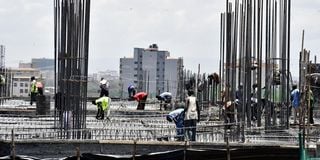
The cost of construction input rose at the fastest pace in nearly two years during the third quarter of 2025, lifted by higher prices of steel, electrical fittings, sand and bitumen, signaling budget pressure on construction projects.
The Construction Input Price Index (Cipi) increased by 1.27 percent between July and September this year, according to Kenya National Bureau of Statistics (KNBS) data, marking the quickest quarterly rise since December 2023. The index stood at 121.27 points, up from 119.75 in the previous quarter and 120.38 in the same period last year.
The Cipi measures the price changes in the inputs used in construction, such as materials, labour, and equipment. The index helps to track overall construction costs.
The increase in Cipi between July and September was driven mainly by steel and reinforced bars, whose prices rose by 5.2 percent, while electrical fittings increased by 5.1 percent.
Prices of bitumen macadam and sand rose by 4.7 percent and 3.6 percent, respectively. The cost of cement and timber, however, eased by 1.39 percent and 2.71 percent, respectively, helping to marginally moderate the overall rise in input costs.
The Building Cost Index, which measures changes in material prices for structural works, rose by 1.48 percent to 121.29 points, while the Civil Engineering Cost Index climbed to 121.79, reflecting higher prices of bitumen and petroleum products.
This marks the sharpest quarterly movement in 21 months, reversing a period of relative price stability that had held since early 2024. The last comparable increase was in December 2023, when construction input prices rose by 1.66 percent.
The cost pressures come at a time when the sector is showing signs of renewed activity.
For instance, cement consumption and production - key indicators of construction demand - hit a record in August 2025, signaling a rebound following last year’s slowdown caused by expensive credit and pending bills that stalled public projects.
Kenya imports a large portion of its construction materials, including steel and clinker, leaving the sector exposed to exchange rate fluctuations and shifts in global commodity prices.
Rising input prices risk squeezing margins for contractors and developers, especially those executing fixed-price contracts under projects such as the government’s Affordable Housing Programme and other public infrastructure projects.
The construction sector suffered first contraction in nearly 11 years during the quarter ended June 2024, shrinking 2.9 percent following budget cuts on major projects and high costs of materials.
The KNBS noted that labour and equipment indices also edged up 0.5 percent during the period under review, reflecting steady wage adjustments and higher machinery operating costs.