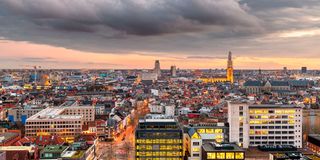
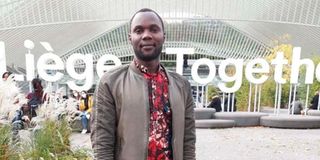
When 32-year-old Charlene Maitha left Kenya in 2018 to go to Belgium, she thought it would be a temporary move for studies. Today, she has settled in Antwerp, Belgium, working as a consultant at Deloitte and sharing her life with her partner. Her story is one of adjustment and learning to fit into two worlds at the same time.
Charlene initially visited Belgium on the Erasmus Mundus programme, a European Commission-sponsored initiative which takes students between three universities in three countries.
That meant France, Belgium, and the Czech Republic for her. She briefly worked in Luxembourg after completing her studies. But the network she established in Belgium, the friendships, professional contacts, and meeting her partner drew her back in 2020, just as Covid-19 was hit.
Leaving Kenya was exciting at first. “It was all studies, new cultures, new people,” she recalls. But after it became a question of settling down, reality hit hard. “I was homesick, and Belgium was full of bureaucracy.”
Immigration papers took six to nine months, leaving her in limbo. Language was another barrier; the Dutch language had to be used in Antwerp, and even with a Master’s degree, it was not simple to enter the job market.
Her first job came one and a half years later, as an assistant financial controller with a shipping company. Recruiters had to “sell” her qualifications to recruiting managers.
Once she had established herself, doors opened, and soon she shifted to consulting with Deloitte, where she feels solidly established.
For Charlene, the most touching part of Belgian culture is the love of planning. “Here you can schedule your life months ahead,” she says. Dinners, concerts and even casual gatherings with friends are scheduled weeks, sometimes a year, in advance.
She has embraced this order, applying it not just at work but also in hobbies like running and dance classes, which she now follows with the same structure.
She also enjoys the Belgian family’s closeness. While not as large as in Africa, the nuclear families are close, and this is something she tries to imitate with her family in Kenya.
However, not everything was easy to adjust to. It was not easy making friends in Belgium. Unlike in Kenya, where friendships are ignited quickly by coincidences, Belgians prefer to stick to childhood groups. Charlene later found friendship among international communities who were also looking for friendships overseas.
Though far from home, Charlene brings Kenya close to her through literature, music and food. Through Spotify, she listens to Kenyan artists and travels across Belgium or the Netherlands when her favourite performers are on tour.
She remembers attending an intimate show by Fancy Fingers, something she says would have been nearly impossible back home. Food, however, is harder.
There are no Kenyan restaurants in Belgium, and importing staples like ugali flour depends on friends making the journey from Nairobi to Brussels.
“Nevertheless, I do try to keep the tradition alive as much as possible when I do, cooking Kenyan meals and mingling with other Kenyans in cities nearby,” she says.
Compared to Kenya, however, life in Belgium feels costly. But Charlene argues that it levels out. “A small flat in Antwerp from about Sh93,120, often including heating water and electricity.”
One of their greatest strengths is healthcare. Despite paying much in taxes, they significantly subsidise healthcare. “A doctor’s visit is as cheap as Sh2,270, and hospitals are good quality,” she says.
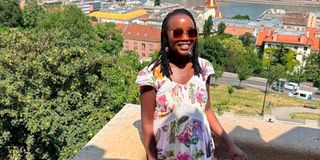
Charlene Maitha, 32, a financial controller at Deloitte and former Erasmus Mundus scholar, balances life between Belgium and Kenya while building a future in Antwerp with her Belgian partner.
Photo credit: Pool
Transport is affordable, with Antwerp buses and trams available at Sh7,570 monthly. Train transport is expensive at about Sh2,270 for a round trip each day, though employers cover most of this.
Seven years after first stepping into Belgium, Charlene feels at home, though she admits to living in-between. “You will never be 100 percent Belgian, and never 100 percent Kenyan,” she says.
In Kenya, she misses Belgium’s order; in Belgium, she misses Kenya’s spontaneity.
Will Charlene stay in Belgium forever? She hesitates. Like most immigrants, she eventually wants to return to Kenya, perhaps to a home she has constructed. But for now, she is realistic. “Winter doesn’t appeal to me, but the job is hard to find back home. I am lucky here.”
Love, family and work
From Antwerp’s structured city life to Nijlen’s quiet family rhythm, another Kenyan story unfolds, one shaped not just by career but also by love, parenting and building a home abroad.
Desmond Situma left Bungoma, Kenya, in 2018. He thought he was only going to Belgium for studies. Seven years later, he settled just outside Antwerp in the small town of Nijlen with a Belgian wife and two children. His story is one of adaptation into a culture far removed from home and yet holding on to his Kenyan roots.
He first arrived in Belgium on a VLIR scholarship, offered through the Inter-University Council for Development Cooperation. The scholarship funds students from the developing world to study in Belgium.
He enrolled at KU Leuven for a Master of Science degree in Sustainable Development, which was to be completed in 2020. But with Covid pandemic, classes were suspended, and he eventually completed his degree in 2022.
Today, at the age of 32, he is a senior project manager in Brussels at CSR Europe, where he advises multinational business companies on sustainability practice.
It was not easy to travel to Belgium. The application for a student visa, he recalls, was simpler because he had a scholarship. Nevertheless, there were challenges. “I made trips from Bungoma to Nairobi for embassy visits. It was expensive, and I didn’t have a lot of money then,” he recounts. “The visa was after about six weeks of waiting.”
When he arrived in Belgium as a student, it wasn’t easy. “When you have a student visa, you’re limited in what kind of work you can do,” Desmond explains.
Like many foreign students, he cleaned and worked in warehouses to make a living. The bigger challenge came after graduating.
“Non-EU citizens are only given a year to become employed, and immigration is also not relaxed; employment is first given to EU nationals before it is given to outsiders,” he says.
Language was another obstacle. Belgium has three national languages: Dutch, French, and German. Staying in the Flemish part of the country meant Dutch was the necessary language. “If you don’t speak the local language, it’s very hard to get meaningful work,” Desmond says.
Social life was one of his initial shocks. “In Bungoma, you say hello to everyone you meet on the road. In Belgium, people don’t even answer, and I thought they must have hated me at first,” he says. But it was not racism; it was cultural. Belgians, he found out, are introverted.
Still, Belgium has taught him values that he treasures. He never paid a bribe to get an opportunity. “Here, it’s merit and skills. That’s something I wish Kenya would adopt more,” he says.
Although he settled in Europe, Desmond is still rooted in Kenya. He returns home frequently, and his job takes him to Africa often. “In Belgium, Kenyan groups hold traditions together with WhatsApp groups, social gatherings, and cultural festivals.” he continues.
Desmond, contrasting Kenya and Belgium, has the surprising conclusion, Kenya is more expensive. In Belgium, his daughter’s kindergarten is free, fully covered by the government.
In Kenya, quality schools are costly. Even basic commodities, bread, milk, sugar cost almost the same in both countries, despite higher salaries in Belgium.
Healthcare is another big difference. In Kenya, it can be expensive. “In Belgium, I pay about Sh18,170 per annum for insurance cover. A hospital will treat you and send the bill later, and a lot of that gets reimbursed. Belgium’s healthcare system is very good.”
Housing, though, is where the weight of Belgium is felt. A three-bedroom family house rented for an average of €1,200 monthly, or smaller studios at Sh75,710 to Sh105,994 depending on area. Desmond has grown fond of the honesty and preservation of heritage in Belgium.
Desmond Situma, 32, Senior Project Manager at CSR Europe, balances family life in Nijlen, Belgium, as a husband and father of two, while maintaining strong ties to his Kenyan roots.
Photo credit: Pool
Seven years after arriving, Desmond is in two worlds. He remains quite Kenyan but has built a life in Belgium. “There are challenges in language, rules, culture, but there’s also fairness and opportunity,” he says.
And even when occasionally he daydreams about returning home, for now, Belgium is home.
Engineering dream
While Desmond balances work, family, and tradition in a small Belgian town, Gladys Kangi’s path takes her deep into academia in Leuven, where the pursuit of water and knowledge defines her everyday life.
When Gladys left Kenya in September 2015, Belgium was not somewhere she ever envisioned. Her dream was the UK or the US, countries in which English flowed so readily to her tongue. Yet at 37, Gladys lives in Leuven, facing academia, culture and the nitty-gritty challenges of life abroad.
She graduated from the University of Nairobi with a civil engineering degree in 2012. She began working as a construction and structural engineer, but something wasn’t right. “I wanted the work to be closer to people, more transformative,” she explains. That is what led her to water engineering.
It was in 2014 that, on searching for a Master’s degree in water resources engineering, she stumbled upon KU Leuven. The following year, she had booked a flight to Belgium.
Her initial process was surprisingly smooth. “The Belgian embassy required proof of financial ability, so I deposited a year’s living expenses into an account at the university. The university then provided me with a certificate of finance, which helped have the visa issued. It all took less than a month and involved medical tests at Nairobi Hospital,” says Gladys.
But travelling to Belgium was an eye-opener. Without a family or friends, the first few weeks were lonely.
Leuven is a town for students, which is bustling but crowded. Housing is difficult to come by. “For a student, a small university room now costs between Sh75,710 and Sh90,852 per month. A one-bedroom flat is between Sh105,994 and Sh136,278, and for a two-bedroom, approximately Sh181,704. The smaller the apartment, the pricier."
Medical care, on the other hand, is available and organised. Medical bills are paid first by insurance, and therefore, patients pay only a portion of the bill. Food was the initial cultural bridge Gladys broke.
“Belgian foods, potatoes, carrots, peas, and meat, were familiar enough.” But she misses Kenyan sukumawiki. “Mangoes in Belgium,” she says “are never quite the same.”
There are also cultural differences. Belgium is an extremely “mind your own business” society. The neighbours do not drop by and have a chat, and even among other Kenyans in Belgium, week-long advance appointments must be made.
Language has also been difficult to adapt to. Upon completion of her master’s in 2017, Gladys came back to Kenya to seek employment. But come January 2018, her former professor at KU Leuven invited her to apply for a PhD scholarship. She won it and went back to Belgium. Though her studies have seen delays, she is determined to see it through.
Being overseas comes with the sacrifice of missing birthdays, weddings, and the development of nieces and nephews at home. “You can go back every year, but it’s not the same,” she admits.
Belgium has gifted Gladys with beautiful memories. The food, the quality of healthcare, the simplicity of administration, and the quality of education have all impacted her life.