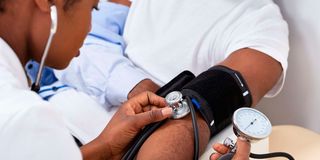
For every 10 adult Kenyans living with high blood pressure, only four are aware of their condition, according to a new statistic, highlighting alarming gaps in access to treatment for a disease that puts millions of lives at risk.
The World Health Organisation's Hypertension Profile 2025 estimates that 5.5 million Kenyans aged 30 to 79 have high blood pressure, equivalent to approximately 28 percent of the population.
However, only seven percent of those affected have their blood pressure under control, leaving around 5.1 million people at an elevated risk of heart attacks, strokes and premature death.
"In practical terms, for every 10 Kenyans living with hypertension, only four know they have it, two are receiving treatment, and just one effectively manages their blood pressure," the WHO said.
High blood pressure, also known as hypertension, is a medical condition where the force of blood against artery walls is consistently high. Most hypertension guidelines say it is diagnosed when blood pressure readings exceed 130/80 mmHg on multiple occasions.
Although its prevalence is slightly below the global average of 33 percent, the real challenge lies in detection, treatment and control.
Daniel Nduiga, a cardiologist, attributes the country's low hypertension control rate to a combination of behavioural and systemic factors.
"Ignorance and denial, as well as poor healthcare advice, contribute to the problem. We need to raise awareness to help identify those affected," explained Dr Nduiga, emphasising that early detection can save lives and reduce the long-term impact of this disease.
The alarming statistics highlight the urgent need for increased awareness and proactive measures to address this growing public health concern.
The Ministry of Health recommends that all adults undergo blood pressure screening at least once every two years, and more frequently for those at higher risk or with pre-existing health conditions.
According to the WHO, lifestyle factors further elevate the risk: like average daily salt intake exceeding recommended limits; tobacco use which is relatively high among men; obesity which affects more women than men and many adults leading sedentary lifestyles.
However, awareness remains low, even in areas with access to healthcare facilities. Some patients stop taking their medication once they feel better, unaware that hypertension requires life-long management.
Adherence to long-term medication is also a significant problem, as hypertension medication typically needs to be taken for life. Missing doses can quickly lead to uncontrolled blood pressure and an increased risk of complications.
Hypertension is one of the leading causes of heart disease, stroke and kidney failure. According to the Ministry of Health, non-communicable diseases, including hypertension, now account for over 50 percent of hospital admissions and almost 40 percent of all deaths.
However, the ministry reports that 44 percent of health facilities lack the capacity to diagnose and treat hypertension accurately.
The financial burden of managing hypertension in Kenya is substantial for households. In Nairobi, monthly expenses for blood pressure management, including medication, doctor visits and laboratory tests, typically range from Sh3,000 to Sh15,000, depending on the severity of the condition and access to care, as reported by the Maarifa Centre—a knowledge and learning platform established by the Council of Governors to collect and share data and case studies from across the country's devolved units.
Prices for hypertension drugs vary widely depending on the brand and availability. Valsartan (Diovan) 160 mg, 28 tablets costs about Sh5,700, while Losartan (Losar-Denk) 50 mg sells for around Sh895. Combination drugs like Repace-H cost about Sh1,500, and Adalat LA 30 mg retails near Sh4,100.