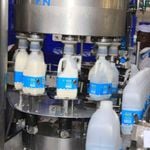
Milk intake in the formal sector hit an all-time high of 690 million litres in the eight months to August, due to an increased supply from farmers to dairy processors in response to attractive prices.
Data from the Kenya National Bureau of Statistics shows that milk delivered formally to dairy processors grew 17.2 percent in the period under review to 690 million litres from 588.9 million litres in a similar period last year.
“Production is up, the prices paid by the formal market are attractive and stable, hence the high supply on our side,” Kenya Dairy Board (KDB) acting Chief Executive William Maritim told the Business Daily.
“New processors have also joined the industry, for example, the Ravine Dairies, increasing the capacity and the numbers we are seeing.”
The milk deliveries this year hit a record high every month since January, with May posting the highest amount of 94.6 million litres sold to the processors.
This was followed by 90.4 million litres in January and 90.2 million litres in June.
Farmers sold the lowest volume of milk of 77.9 million litres in February, which was, however, higher than the deliveries in every month of 2023 and most of 2024.
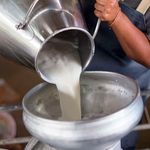
Most of the milk produced in Kenya does not reach the formal markets, according to a previous study, which found that the majority of households buy raw milk directly from farmers and traders.
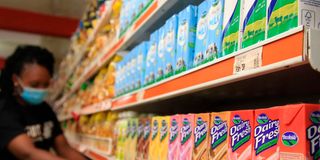
Retailers are selling packaged milk at substantial differences in prices. A spot check shows that a half litre of milk at various supermarkets in Nairobi ranges from Sh50 to Sh60.
At Naivas Supermarkets, a 500ml packet of milk varied between Sh38 and Sh55, depending on the brand.
Fresh milk at Carrefour is sold at between Sh47 and Sh66, for a 500ml packet, depending on the brand and type of packaging.
With an estimated 1.8 million smallholder farmers who make up around 80 percent of the producers, it is estimated that about 80 percent of Kenya’s milk is marketed informally.
The formal sector refers to milk that is collected, processed or distributed via licensed, regulated channels, as opposed to the informal market of raw milk sold locally in Kenya.
KDB had earlier estimated production—including formally and informally marketed milk—to be about 5.2 billion litres annually.
In its 2024-2027 strategic plan, KDB aims to grow Kenya’s annual milk production to 11 billion litres and boost exports to one billion litres.
The Kenya dairy sector is the largest in East Africa, contributing approximately four percent to the national gross domestic product GDP and 14 percent of the agricultural GDP, according to the International Livestock Research Institute. It provides livelihoods for about 1.8 million households and creates over 700,000 jobs.