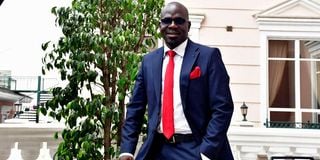
A little story about how God works: In 1993, the Very Reverend Canon Evans Omollo, now the Provost of All Saints’ Cathedral, joined Maranda High School. He was one of the top students in mathematics and believed his future was assured.
“I knew I would become something, somebody, in economics, or some cutting edge linguistics,” he says.
But when he couldn’t raise school fees in Form Two, his education came to an abrupt stop. He dropped out and stayed out of school for seven years—until someone saw him preach and decided to sponsor him to train for priesthood. He enrolled in seminary as a high school dropout while also preparing privately for his KCSE.
He sat his exams at the age of 26 and passed, the same year he was ordained as a priest in the Anglican Diocese of Bondo, in 2004. That year, he also earned a Higher Diploma in Theology.
In 2006, he left for the UK, where he graduated with a Bachelor of Arts in Cross-Cultural Mission and a Master of Arts in Mission with Leadership from All Nations Christian College.
He would go on to serve as the Provincial Mission Director for the Anglican Church for five years, then as Assistant Provost of All Saints Cathedral for six and a half years, before being installed as the 14th Provost in 2023.
“You see,” he said in his office recently, “God interrupted my education to get me into church.” The furniture in his office has since been rearranged from the last time we were here to interview his predecessor, Provost Dr Sammy Wainaina.
“We were taught in leadership that if you can’t change anything, at least change the sitting arrangement,” he added, tongue-in-cheek. Maybe that’s still how God works, interrupting, rearranging, sometimes even moving a chair or two, just to remind us that nothing, no detour, no delay—is ever wasted.
Do you feel like moving about furniture has changed something in how you run this church?
Absolutely. From a physical perspective, I get more light at my desk now. But beyond that, when someone walks in and realises, this isn’t how it used to be, it triggers something in their mind.
They register that there’s been a change in leadership. You’re speaking directly into their psychology, signalling that things aren’t business as usual. The awareness of newness is very powerful, psychologically.
What significant work were you itching to get on with when you took office?
The major one was strengthening the parish’s spiritual life, not just maintaining it, but going deeper. That’s why people come to church: for nourishment and transformation.
The first thing we changed was our preaching style. We moved from topical preaching, say, picking a theme like forgiveness, to expository preaching, unpacking scripture book by book.
We started with Romans; this year, we’re in the Gospel of John. It forces preachers to engage the whole Bible, even the hard parts, and it disciples’ people from the pulpit.
The second focus was leadership within ministries— youth, women, men, children. I realised the men’s ministry was struggling, so I led from the front. I called them, met them, even joined their nyama choma hangouts. We grew from about 30 men to over 100.
And when we meet, we talk about real things, marriage, faith, even sex and intimacy. Many men are quietly battling infidelity and separation. Some are in the “side-chick” culture, even while serving in church, and it’s tearing families apart.
So we confront these issues with scripture, talk honestly and challenge each other to live right, not just to “make heaven,” but to build wholesome lives here.
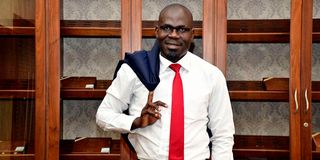
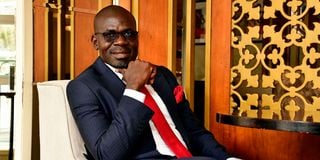
Reverend Canon Evans Omollo, the Provost of All Saints’ Cathedral poses for a picture after an interview on October 30, 2025.
Photo credit: Francis Nderitu | Nation Media Group
Provost, why can’t an African man have many wives? Putting Christianity aside for a moment, can a man have two or three wives and still be a good person, someone God would be proud of?
[Laughs] Well, I say this with context, I’m a product of polygamy. My mother was my father’s second wife. So I understand it from the inside.
In those days, people often married again because of practical reasons, labour on the farm, lineage, survival. But today, it’s different. The pressure to take another wife often comes from emotional disconnection.
I work with many couples, and I see it: people who can’t connect anymore. The man is lonely. He’s in his 40s or 50s, doing well, feeling renewed, but there’s tension at home. And in that loneliness, he seeks warmth and company. Sex just becomes part of that package. Is it wrong? From what I’ve seen, it brings a lot of complications. Growing up in a polygamous home, I saw tension, jealousy, even hatred. Families divided. It’s rarely peaceful.
Now, I’m not saying it never works — some people manage it. But I wouldn’t recommend it. Scripture is clear, and I choose to stay within it. If I weren’t a believer, maybe I’d say, fine, if you can handle it. But the truth is, it’s difficult. So I hold to the Bible — one wife, one covenant — and I focus on building the kind of marriage that keeps me from ever needing to look elsewhere.
Do you believe that all marriages have to work?
Like making Nairobi work? [Chuckles] I guess they should.
Even if couples outgrow each other years down the road, through no fault of their own?
I see your argument, and it's credible. But I’m not sure it’s about outgrowing each other. It’s more about making the wrong choices and failing to live by principles that sustain a marriage.
It’s not distance that breaks it — it’s pride, selfishness, stubbornness. Sometimes even external pressures. There are cases, Biko, where after assessing a couple, I’ve had to accept that it just won’t work. And when that happens, it’s better they go their separate ways. Some unions are simply too difficult to sustain.
You are currently pursuing a doctorate in Missional Ecclesiology. What is that?
[Chuckles] Ecclesiology comes from the Greek word ecclesia, which means “church.” So, ecclesiology is essentially the study of the church. The “ology” part, like in theology, just means “the study of.”
Now, missional ecclesiology looks at how the church can be mission-oriented—that is, focused on bringing people to God and helping them understand Him. It asks: How can the church exist primarily as a conduit to bring people into a living relationship with God? The opposite of that would be what you might call an institutional church—one that just exists to exist, to be comfortable, maybe even rich.
You know, in England—where I went to school—the Church of England is very much an institution. It’s there; people come if they want.
Like a bank or a post office—it just exists. But missional ecclesiology challenges that model. It’s about a church that actively goes out, touches lives, and makes faith real in people’s everyday experiences.
Is there something you would change in the 29 years you’ve served the church?
That’s a very deep question. [Long pause] Maybe not change—but do differently. One, I’d marry earlier. I got married just before turning 33. If I could do it again, I’d marry younger. Why? Because you’ve got more energy for life then. More time to see your children grow.
I’m 47 now, my daughter is 13. By the time I retire at 65, she’ll just be a few years out of university. I wish I’d raised my children when I was younger, more energetic—so that by the time they’re done with school, I’d be enjoying grandchildren as I retire.
[Pause] Another thing is my schooling path, I wish I’d gone through education like everybody else; through a straight line. I was a very good student when I was young, but maybe God saw that a smooth route would have spoiled me. So He interrupted it. Brought me into the church. And the church has formed me into who I am today.
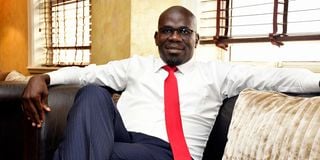
Reverend Canon Evans Omollo, the Provost of All Saints’ Cathedral poses for a picture after an interview on October 30, 2025.
Photo credit: Francis Nderitu | Nation Media Group
In the 29 years, are there moments that you questioned your decisions to get into church and what happened then?
[Pause] Yeah. You know, people tend to see “the church” as one big monolith, but I’ve always tried to show it has many expressions.
Still, one thing I’ve seen—personally and around me—is how deeply people can get hurt in it. Some feel rejected, even thrown off completely. I came close to myself. But God saved me from that edge.
I’ve had a lot of grace, a lot of favour. The truth is, while I’ve seen others wounded by the church, the church has mostly been good to me. But it’s not without politics. You see, in State politics, people will tell you to your face, “Biko, I don’t like you. You’re a thief.” It’s crude, but honest.
In the church, it’s different. People smile, call you “man of God,” but when they sit in rooms full of opportunity, instead of mentioning your name, they quietly tear it apart.
Where there’s competition, there’s politics. And the higher you go, the more the interests multiply. At my level, people start wondering, “So where does he go next?” And suddenly, you find yourself in a quiet jostle.
If you're to do a diagnosis of your spiritual health, how do you think it looks like today?
[Pause] I’d say I have a clear conviction of who God is, and a real relationship with Him—and that, really, is the entry point of faith. I encountered Christ at 18, and that moment set me on a lifelong journey.
Twenty-nine years later, I’ve built a framework of prayer, of reading scripture, of listening to God—both through His word and through others.
[Pause] But if I’m honest, my commitment back then was stronger. I had fewer distractions. I could give God my all—we’d pray overnight, fast for days. There was a purity of focus.
Then came family—marriage, children, ministry, leadership—and with each came new demands. These days, I sometimes find myself in quiet conflict with the very values I hold dear: prayer, scripture, and the practices that once revived my spirit.
People must put you on a pedestal. Do you feel the pressure to conform to that idea—when really, you’re just a man?
Of course. A lot. That’s not how I was raised. I’m a grassroots person. I wasn’t born into privilege; I didn’t grow up around power. So I struggle with some of the formalities of this role.
When I first became Provost, people would literally stand when I walked in—even staff. I’d say, “No, no, please sit.” Some see you as an idol, and I try, as much as I can, to push back. I don’t have all the answers. I’m just a man doing my best.
This office makes people assume you’re powerful, even holy. I once told the congregation, “Don’t clap after I preach. Pray instead.” Some understood; others were offended. But I meant it. Why clap for me? The focus should be on God, not applause. Even small things—how I dress, where I go—people attach meaning to them.
When I grew this beard last year, it was just a New Year’s resolution. My first ever. I keep it trimmed—it’s not as long as yours. [Laughs] When I started, some said, “That’s not the look of a Provost.” I told them, “It’s my beard!” So I kept it—stubbornly. Maybe it’s a 40s thing.
How has AI impacted on your work as a provost?
Yeah, crazy one. When I became Provost in 2023, one of the things God placed on my heart was to lead the church into what I call the digital church.
Reverend Canon Evans Omollo, the Provost of All Saints’ Cathedral poses for a picture after an interview on October 30, 2025.
Photo credit: Francis Nderitu | Nation Media Group
Out of my 10 pillars, one was focused on growing All Saints into a digital church. So we’ve invested heavily in building our digital presence. And through that, I’ve seen both the potential and the dangers that come with technology—especially AI.
Personally, I use AI tools quite a bit in my work. Even this morning, I was doing research and found myself using some of those tools friends have introduced me to. You can’t help but be amazed at their brilliance. But with that comes a new kind of challenge.
We have many tech-savvy people in church. So, on a Saturday evening before Sunday, a friend might text me, “Provost, tomorrow’s sermon is from this passage, right?” Then they run it through ChatGPT, generate a full sermon, and send it to me saying, “Consider this for tomorrow.” What they’re really telling me is, “If you preach off, I’ll know.” [Laughs] So there’s pressure now. Because with AI, you don’t need to go to theological school to generate a decent sermon. It has raised the bar—and the stakes.
What are your greatest fears now, as a 47-year-old man?
My fears… you’re asking very difficult questions. [Chuckles] I think about what my children would say at my funeral. That’s actually a discussion I often have with my daughter when I drop her at school. I ask her, “Mom, what will you tell people at my funeral about me?” She never likes that conversation. She’ll tear up and tell me to stop, but I keep at it. I tell her, “You know, I can die anytime.
So yes, I think a lot about what people would say about me when I’m gone—what my family would say, what my children would remember. It’s not exactly a fear; it’s more like a pressure.
A pressure to live well, to be present with my family, and to remain authentic in public. That people don’t one day hear, “Evans, who was preaching here so passionately, has a child somewhere else.” As a priest, that’s my biggest burden—to stay faithful to what I teach.
Would you like to add anything else to this conversation that I haven't asked.
My wife. I’d like to appreciate her vital role in where I am now. You know, she met me as a priest. I was deep in the village then—but she believed in me.
I had just come back from the UK and was teaching, but still, life was modest. Yet she saw something in me and agreed to marry me. And honestly, when I met her, favour came. Not long after, I was called to serve in the Archbishop’s office. Interestingly, she was already connected to All Saints’ Cathedral—she grew up here.
I still believe that her presence in my life, her roots here, somehow connected me to this place.
Selina has played a critical role in shaping who I’ve become. She was brought up in privilege, and I wasn’t—I was a village boy. But she never saw that difference.