We often discuss rights in terms of education, healthcare, or access to clean water. While these are all critical to our survival, and indeed our development, one of the most powerful enablers of dignity and opportunity is access to credit. Unfortunately, this is rarely framed as a human right, and yet, it should be.
Credit is not merely a financial instrument. For millions of Kenyans, it is the difference between survival and progress; between operating at the margins of the economy and building a livelihood with dignity.
Without access to finance, a farmer cannot expand production, a small trader cannot stock inventory, and a young entrepreneur cannot scale an idea into a thriving business.
Kenya has made strides in financial inclusion. According to the 2024 FinAccess survey, 84.8 percent of the population now has formal financial access, with credit usage rising to 64 percent of the total population.
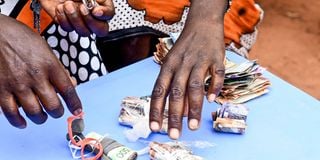
Yet beneath these gains lies a stubborn gap: Many Kenyans, especially women, and those in the informal sector still depend on unregulated sources like chamas (savings and investment groups), relatives, or even shylocks.
While these informal systems are important, they cannot provide the scale or sustainability required to unlock long-term opportunity. For women, rural communities, and micro-enterprises, the barriers are even higher.
This exclusion is not trivial. It systematically denies people the agency to grow, invest, and participate fully in the economy.
A key way of boosting financial inclusion is the adoption of lending models tailored to women, youth, and informal workers. Products designed for chamas, agribusiness collectives, and youth start-ups have made it possible for those without traditional collateral to access financing.
These inclusive models matter in a country where women-led enterprises face a $2 billion credit gap, youth unemployment remains stubbornly high, and the informal sector employs over 80 percent of Kenya’s workforce. Credit, designed inclusively, is the bridge.
The future of credit is not only inclusive but also green. Increasingly small loans are already being extended to households and small enterprises for solar home systems, clean cooking solutions, and water access projects. These not only reduce emissions but also cut household energy costs and improve resilience.
As Kenya positions itself as a green economy leader, community-level green lending will be critical. A small loan for a solar irrigation kit may seem minor in the national balance sheet, but for a farmer, it is the difference between food insecurity and surplus. For a village, it can mean the difference between vulnerability and resilience.
Access to credit must be reframed as a human right. If we can guarantee education, water, or healthcare, why not guarantee financial access—the very thing that allows individuals to pay for these services and improve their lives?
As Kenya works toward inclusive growth and climate resilience, the ability of ordinary people to access and use credit must be treated not as a privilege for the few but as a right for all.
The writer is Faulu Microfinance Bank Managing Director.