The last week of November 2025 has been stacked with exciting theatrical releases: Now You See Me: Now You Don’t, Wicked: For Good, and The Running Man.
These Hollywood productions, while undeniably spectacular in their visuals, highlight a frustrating tendency that has become deeply ingrained in mainstream cinema — the persistent focus on using film, primarily, as a platform for social messaging rather than as an instrument of pure escapism.
While these films are well-crafted, they often feel weighed down by the perceived mandate to deliver a societal critique or meet representation quotas, sacrificing the unadulterated pleasure of spectacle for the sake of commentary.
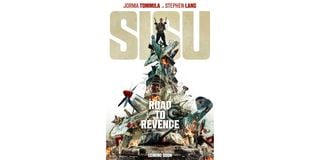
This over-intellectualisation makes the Finnish film Sisu: Road to Revenge a remarkable and refreshing standout among this year’s releases.
Sisu
In 2022, a Finnish film called Sisu quietly dropped and surprised audiences worldwide. It wasn’t a Hollywood juggernaut, but it applied a simple, universal storytelling formula, one man refusing to give up, told through outrageous action sequences and a style that wasn’t entirely new but felt fresh in execution.
Director Jalmari Helander tapped into something primal, grit, survival, and spectacle, without the baggage of over-explaining or being a mirror of modern society.
Now, three years later, Helander is back with a sequel, Sisu: Road to Revenge (stylised as SI2U), somehow proving lightning can strike twice.
The immediate question here is, if you haven’t seen the original Sisu, can you still enjoy this sequel? Absolutely. It stands firmly on its own, though knowing Aatami Korpi’s backstory adds depth.
If you’ve seen the first film, you’ll appreciate how much further this one goes, if not, the premise is simple enough to carry itself. Like John Wick, the filmmaker makes sure the character’s motivation is clear from the start, avoiding the burden of tying itself too tightly to the first film.
Spoiler-free setup
The film once again follows Aatami Korpi, played by Jorma Tommila. He’s still stubborn, grieving, and unwilling to let go of the past. On his journey to relocate something (avoiding spoiler here), his history catches up with him.
The Red Army commander who killed his family, played by Stephen Lang, resurfaces, and suddenly Korpi is thrust into a violent chase across Soviet territory, hunted.
This movie feels like a cocktail of John Wick, Rambo, Commando, Mad Max, and the first Sisu. That sounds chaotic, but watching it, you see the coherence. The adventure is in the constant movement, explosions and stunts that keep the energy high.
It’s modern and distinct yet still feels like an ’80s action film, with sequences that look ripped straight from a graphic novel. Even with the absurdity, the film sneaks in a bit of humour.
Korpi’s deadpan seriousness makes his survival almost comical, watching someone refuse to quit no matter how ridiculous things get. The first Sisu was stripped down and bleak, this one amplifies everything. It’s faster, funnier, and more outrageous.
Performances
Jorma Tommila is phenomenal. The guy is 66, his weathered look gives the film its grit. He looks like a man who’s been through hell and refuses to stop. His age makes the action scenes more intense because in the back of your mind, you know he’s not a young man.
Stephen Lang, remembered by many as the villain in Avatar and Don’t Breathe, is equally compelling. His portrayal of the Red Army commander is pure effective, relentless in his pursuit of Korpi, building tension toward their inevitable confrontation.
Symbolism
What elevates Sisu: Road to Revenge is that it doesn’t forget what made the first film special. Korpi’s motivation isn’t just a plot device, it’s symbolic. He’s literally carrying his past with him, refusing to bury grief. The revenge story is straightforward, but the film layers in themes of resilience and memory.
It’s brutal, yes, but also poetic. Dragging something so heavy across battlefields is absurd, yet it becomes a metaphor for grief and survival. That’s what pushes the film beyond “just another action flick.” It says what it needs to say without looking down or pointing a finger at the audience.
The sequel raises the stakes but never loses sight of its protagonist. Even amid chaos, the focus is always on Korpi, forcing the audience to empathise with him.
You cheer when he refuses to die or surrender. The director knows audiences aren’t just here for explosions; they’re here for the man at the centre.
The pacing is relentless. If the first film was slow and tense, this one is a rollercoaster of inventive set pieces. Without spoiling specifics, some sequences will linger in your mind long after. At 89 minutes, the film wastes no time. It’s lean, giving you exactly what the poster promises, no filler, no indulgent detours.
Beyond Hollywood
What’s refreshing is that most globally recognised action films usually come from Hollywood. Sisu and its sequel prove that other countries can deliver something equally powerful.
The director taps into universal themes; revenge, grief, and survival, and packages them in a way that resonates across cultures and makes this a globally marketable film.
This got me thinking about Kenya’s film culture. Just days ago, I saw a poster for a stunt workshop happening on Sunday, November 30th, at the Kenya National Theatre (Tell a stunt friend to tell a stunt friend).
I thought it was significant, proof that the foundation for Kenyan action cinema is there. In fact, stunt and visual effects teams are the marginalised group of filmmakers who deserve more attention from the Kenya Film Commission and other stakeholders. They should be given residencies, training opportunities, and exposure to foreign professionals.
Yes, Sisu had a substantial budget, but the fact that it exists, and is better than much of Hollywood’s current action output, proves that Africa, and Kenya specifically, has a seat at the genre’s table. We only need to rise to the occasion.
Gripes
The only thing you need to remember before watching this is to throw logic out the window. Many of the action scenes make little to no sense if you think too hard, but they’re so enjoyable that it hardly matters.
Final thoughts
I love this film. It’s over the top, sometimes unbelievable, occasionally too much. But that’s the allure of the Sisu films. They never play it safe. They throw everything at you, and if you’re willing to go along for the ride, you’ll have a blast. Tommila’s performance grounds it, Lang’s villain gives it weight, and Helander’s direction keeps it moving at breakneck speed.
Most importantly, by embracing visceral action and the thrill of the chase without holding back, this film doesn’t feel like a waste of money, unlike much of what’s currently showing. Wicked: For Good may have its merits, but that’s a story for another day.