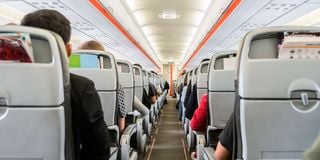
It starts long before boarding, sometimes at check-in, other times mid-booking. The fight for the perfect seat can be an unspoken war of preferences, and in this battle, the window seat almost always takes the crown, especially among women.
In most cases, “the window seat is always preferred either for the view, the photos, or the illusion of a personal corner in the clouds.”
However, as it turns out, that scramble for legroom or a glimpse of the sky says a lot more about you than you might think.
“People’s preferences will depend on many factors, which tell a lot about their personality,” says psychologist Cleopa Njiru.
Take the window seat, for instance, Mr Njiru says, it often attracts introverts. “There is a tendency for the people who like staying alone, the introverts. When they are near a window, they presume it’s only one seat out; there is no one on the side, so it’s them and the window.
For them, their energy is when they are alone, whether they are in an aeroplane or at home. Not alone as in loneliness, the negative way, but their own space,” he says.
For aisle lovers, the reasons can be practical and psychological. “People who prefer to stay at the aisle, they consider some internal things like safety, they can walk very fast in case of an accident,” he says.
And then there’s the front of the plane, especially business or first class—a power seat. “When you sit at a specific place, maybe by the front, there is that feeling of control. You will find many people who have a high status, they are rich, and they would prefer to go to that space in front of the aeroplane. In a way, it’s a sense of control and power.”
The middle seat? Almost nobody’s choice. “Many people don’t even go for that seat even when there is a discount. They prefer to sit either near the window or in the aisle, but still near the front.”
The back seat, the psychologist adds, is often reserved for those “who are not very keen on where to sit,” or for people driven by past traumas. “There are a few people who may go there because of anxiety, or because of their past trauma, so they’d rather sit somewhere where they feel they are safe.”
Middle seat? Never!
Bronwyne Andabwa has been on enough flights to know exactly what she wants. She has crisscrossed continents, going to Uganda, Ghana, Burundi, France, Canada, and countless others and with every trip, one rule has stayed the same.
“I would never sit in the middle seat. I would rather rebook,” she says.
For Ms Andabwa, her seat selection is more of a strategy that adds to her preference. She is tall, which means legroom feels like a necessity. “I’m usually very fast to do my online booking so that I get the seat I want. It has to be comfortable for my legroom, and most of the time I prefer the first seats of either section,” she says.
Her first choice is always the window. “I like taking good pictures. That seat also gives me a small bubble of peace. I feel I am in my own corner, which I enjoy leaning to watch the clouds and the excitement of the countries I'm flying to, aerial view before landing,” she says.
But she’s practical, too. “The aisle comes second, especially for long flights, because it’s easier to move around.”
Still, her hierarchy never changes; it's always window first, aisle second, middle never.
Work travel, Ms Andabwa admits, occasionally tests her taste. Some trips are compulsory, with tickets booked for her.
Has she ever been forced into the middle?
“If I have been booked by my work, I make sure that I check online to get the seat I want, even if it means sitting at the back,” she says.
“Sometimes I find myself making friends with the air hostesses for an empty window seat, since in most travels there are usually empty seats, but I have never sat in the middle seat because I’m always very fast to secure my choice.”
“When you travel as much as I do, you learn that where you sit can be part of your travel attitude. I prefer feeling comfortable and enjoying the ride rather than just having the thought of ‘as long as I get to my destination’,” she adds.
Inside the seat selection habits
For many travellers, the seat selection is a ritual, one that Kenda Adembesa, Manager of Ancillaries and Kenya Airways Holidays, talks about.
“Business travellers usually go for aisle seats for ease of movement while leisure travellers prefer window seats for the views and a bit more privacy. Bulkhead and exit row seats are a quick pick for those looking for extra legroom,” she says.
But how passengers secure these coveted spots, she says, has also shifted. “During peak season, many passengers select their seats during booking, especially when flying with family or in groups, while others wait for online check-in,” she says.
“There is also a growing interest in options like ‘Bid-to-Upgrade’ and ‘Last Minute Upgrades,’ especially for those looking for premium seats at a better value.”
Route type, she adds, plays a big role in these choices. “On shorter routes, aisle seats are often preferred for quick exit, while on long-haul flights, passengers prioritise comfort over convenience. We see more demand for window seats, extra legroom, blocking the seat next to you and business class upgrades.”
Additionally, the rise of digital tools has only intensified these behaviours. “Digital tools have made it easier for passengers to personalise their journey. Early seat selection (Manage my booking) and online check-in offer added convenience, and more travellers are opting to pay for preferred seats or bid for upgrades, especially on long-haul routes.”
What do passengers say about their choices once they’re in the air?
“Passengers travelling with family, in groups, or with a companion place a high value on sitting together, making advance seat selection important. In Business Class, features like lie-flat seats and direct aisle access consistently receive positive feedback.”