Time flies with great content! Renew in to keep enjoying all our premium content.
Prime
Why Kenya must fastrack renewable energy investments
Energy projects succeed when local people see tangible benefits. Communities must not only gain access to electricity but also share in jobs, business opportunities, and even equity.
Kenya today stands at an inflection point. Our economy is growing, our cities are expanding, and our population is becoming more urban, and more connected.
With this progress comes surging demand for electricity. But we face a double bind; how to power that growth while protecting our economy and our people from the destabilising forces of climate change.
The old model of relying on imported fossil fuels or overdependence on hydropower is no longer sustainable. The time for incremental progress has passed. Kenya must move decisively and invest boldly in renewable energy.
Few countries are as blessed with renewable resources as Kenya. Beneath the Rift Valley for one, lies immense geothermal potential, already making us one of the global leaders in this technology.
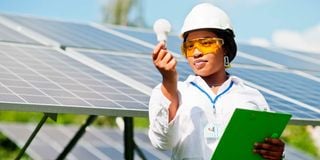
The winds across Turkana, Marsabit, and Ngong Hills are steady and strong. The solar irradiation across northern, western, and eastern Kenya is only second if not better than that of the Arabian Peninsula.
And our rivers, descending from highland forests to the Indian Ocean, still hold untapped power potential despite the legacy hydro electric power projects.
But natural abundance is not enough. Resources only become assets when they are harnessed, put to good use for the good of both humanity and the planet.
To unlock this potential, Kenya must act on several fronts. First, policy ambition. Kenya has made important progress with feed-in tariffs and progressive power purchase agreements. But we need to go further.
Clearer regulations, faster permitting, and bolder targets will give investors confidence and accelerate timelines. The global energy transition is moving fast, unless we keep pace, we risk being left behind.
Second, innovative financing. Renewable projects require large upfront investment, but the long-term costs are lower. Kenya should expand its use of green bonds, blended finance models, and public-private partnerships.
Development finance institutions are eager to fund clean energy. Our challenge is to provide bankable projects and transparent frameworks.
Third, human capital. A renewable revolution is not just about technology, it is about people. Kenya must invest in capacity building, training technicians, engineers, and energy entrepreneurs.
Our universities and technical colleges should partner with industry to create a workforce ready for the next generation of power systems.
Fourth, community participation.
Energy projects succeed when local people see tangible benefits. Communities must not only gain access to electricity but also share in jobs, business opportunities, and even equity. Projects that treat host communities as partners rather than obstacles move faster and last longer.
Finally, partnerships. At KenGen, we plan to expand our renewable capacity by more than 1,500MW over the next decade. But this is only one part of the puzzle.
The private sector, government, international investors, and development partners must collaborate at scale. This is not a race Kenya can run alone
Yet, this is also a moment of great geopolitical significance.
The global energy transition will reshape trade flows, supply chains, and alliances. Countries that control renewable resources, from cobalt and lithium to geothermal fields and wind corridors, will have new leverage in the world economy. Kenya must not miss this chance to define its role.
The costs of delay are steep: slower growth, higher fuel imports, greater exposure to climate shocks, and lost opportunities in the global green economy.
The rewards of action on the other hand are just as clear; energy security, job creation, competitiveness, and climate leadership.
The world is watching. Kenya has a chance to show what an African nation can achieve when it marries ambition with action.
By fast-tracking renewable investment, we can light homes, power industries, secure our future, and contribute meaningfully to the fight against climate change.
Our choice is stark but simple. We can cling to outdated models and pay the price. Or we can leap forward, harnessing the power beneath our feet and above our heads, and claim our place in the global green transition.
The writer is the Managing Director and CEO of Kenya Electricity Generating Company PLC (KenGen). Email: md&[email protected] Twitter: @kenGenMDandCEO
Unlock a world of exclusive content today!Unlock a world of exclusive content today!