Everyone thinks running an Airbnb is easy, especially in the current competitive market. You would think it’s a matter of finding a nice apartment, adding a few pillows, listing it online, and waiting for the money to roll in.
Not right. The BDLife interviewed Airbnb hosts who say that behind the Instagram-perfect photos lies a different reality: huge setup costs, expenses, demanding guests, and a competition that forces them to keep upgrading just to stay relevant.
It takes more than good furniture to satisfy the “home away from home” feel.
When Lennox Otieno talks about Airbnb, he doesn’t romanticise it. He says it is a business that looks glamorous on the outside but requires constant reinvention to stay afloat.
The owner of Subleasing Kenya has four Airbnbs, two in Nairobi and two in Mombasa, which he says is a niche market that many new hosts rarely think about.
“About 95 percent of my clientele are foreigners and Kenyans from the diaspora,” he says, adding that this has opened up a new business for him from guests who request him to buy property in Kenya and furnish and manage it for the Airbnb business.
His journey into the short-stay rental business began in 2019. “When I opened my first Airbnb along Nairobi's Mombasa Road near the airport, it was a period when there was a huge demand. I never ran out of clients for the first few months,” he says.
But the "honeymoon period" after his first four months was short-lived.
“It was during that time that I began to realise the problems that come with managing Airbnbs. I had always gained experience with long-term hybrid clients who stay for months, which didn’t expose me to the daily issues. I started experiencing things like security concerns and invested in smart locks to know who is coming to my property,” he says.
This meant more money than he had planned for.
Lenox explains that there were also lessons in how much to invest and how much to hold back.
“With my first Airbnb, I had put extras, things that were not really necessities, which were stolen. This taught me to reduce what I buy,” he says. “I also had to invest in software that helped me market and automate my Airbnb business.”
To make his first studio apartment ready for guests, it cost him Sh300,000. Today, he says none of his properties has cost him less than Sh600,000.
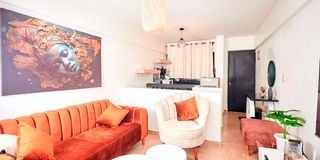
“I did my first studio apartment with just basic designs. But with others, I made them more luxurious to cater for the tastes of international clients, and make them comfortable.”
"I have had to buy things like steamers, customised gifts, chandeliers, wall art, etc,” he says.
Lennox Otieno, CEO of Subleasing Kenya and Airbnb owner based in Mombasa and Nairobi.
Photo credit: Pool
While both cities are lucrative, he positions his properties differently, saying that the Mombasa market is very profitable because the city’s main economic activity s tourism.
The pricing, he adds, changes depending on whether the Airbnb is in Nairobi or Mombasa, and the time of the year.
“The charges are almost the same; however, the benefit that comes with having a house in Mombasa, especially during the peak holiday season, is that you can hike the price, unlike Nairobi, where we have constant prices,” he says.
“The prices vary up to Sh6,000.”
The real costs
Lenox says that it’s easy to be carried away by the numbers until you start balancing the earnings against the overheads.
“Running costs include things like water, electricity, WiFi, a cleaner, and emergencies in case some items are wrecked. You can’t budget for some cases. I put aside about Sh15,000 every month for these, although that is for the studio apartments. The bigger the property, the higher the cost.”
What about the revenue?
“This past year, the revenue has been slow because of political disabilities and economic challenges. Before that, it was good. Airbnbs are a very profitable business,” he says.
To keep the business alive during tough times, he admits that he sometimes has to use money from other sources.
“This year I have not taken loans, but I have sourced money from other places to keep my business afloat because of the low occupancy and high competition,” he says.
How does he do his marketing?
“I don’t struggle to market; my houses sell themselves through reviews. You can’t find any of my houses on TikTok. They are all on Airbnb platforms and Booking.com. The advantage of having a luxurious property is that even when a guest is planning on a short stay, they can easily prolong their stay. That is how I get to have long-term clients, and we make easy profits. I also do well with referrals,” he says.
Over the years, the Airbnb market has become saturated, would he recommend this to someone thinking of getting into the business?
“Yes, but you should not come with high expectations. This is not a life-changing business opportunity. It is like any other business, where you should expect to have realistic graphs. There are bad days and bad clients who cause you extra costs. It shouldn't be your main hustle, especially if you only own one,” he says.
Marketing meets luxury
Where Lennox builds trust to grow his Airbnb business, Abdirahman Mohammed, founder of Luxion Properties, sells a lifestyle.
“I invested a starting capital of Sh500,000. With that, I was able to make myself a good Airbnb that has a five-star type of feel,” he says However, his first apartment in Westlands, he says, took months to gain traction.
“The first two months, I wasn’t getting clients, which pushed me to start doing serious marketing, and afterwards, I started getting clients. After seven months, I opened the second one in South B, which cost me almost Sh300,000,” he says.
Currently, Abdirahman’s portfolio stretches to Shanzu in Mombasa, where his beachside houses fetch Sh5,000 each a night.
“What makes them conducive is that everything is near: the highway, the mall, the beach. From August to December, Mombasa is mostly profitable. From January to July, I’m in Nairobi,” he says.
Abdirahman Mohammed, founder of Luxion Properties.
Photo credit: Pool
However, the business is not all rosy as costs pile up.
“You might get three clients in a week. I will have a cleaning lady come, which will cost me Sh1,000 every time she cleans. When I combine other costs like Wi-Fi, electricity, and breakages, it costs Sh12,000 monthly,” he says.
Marketing has played a big role. “I’m big on Instagram, TikTok, and Facebook markets. I also leave brochures at apartments of my developer friends, so clients call me directly,” he says.
Additionally, there are some personal touches which he believes set him apart. “I give my clients handwritten welcome notes, sweets, and a guidebook of places to visit. If they want to go somewhere fancy, I plug them as well,” he says.
Despite it all, he’s never taken a loan or gone into loss. “From the marketing I’m doing, my house may stay vacant four days a month, but I have never experienced a loss.”
Homely comforts in Kisumu
Away from Nairobi and Mombasa’s beaches, Gorette Atieno has carved her niche near Lake Victoria.
“I own a boutique and an Airbnb business. Initially, I studied hospitality, but I didn’t pursue it as a career. Then one day I was scrolling TikTok, and all these videos about Airbnb kept coming up, and I thought, maybe the algorithm is trying to tell me something.”
Her two-bedroom Milimani house in Kisumu cost her about Sh400,000 to furnish, including the Sh45,000 monthly rent and deposit.
“I sourced furniture from a local fundi, shopped for detergents from the supermarkets, and did the interior design myself. I wanted neutral colours because when clients call, they demand things like, ‘I hope the sheets are cotton,’ or ‘I hope the house does not have a lot of colours,’” she says.
Gorette Atieno, who runs an Airbnb business in Milimani, Kisumu.
Photo credit: Pool
What she banked on was creating a house with a homely feel.
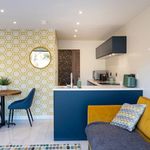
“Somewhere where you can sit by the patio, listen to the birds chirping, and make tea in the morning. I have grey couches, a white marble table, cream-and-gold dining chairs, and white beddings with throws to play with colours,” she says.
Gorette says the Kisumu market is less intense in terms of competition and unpredictable. “It’s not as competitive as Nairobi or Mombasa, but you still have to outsmart others,” she says. “There’s a week I didn’t have any guests. Sometimes you even take short stays where someone just wants to nap for two hours,” she says
Designing the experience
Airbnb aesthetics play a big role in growing a business, but sometimes new owners may spend so much money that they struggle to break even.
Diana Wahungu, an interior designer and founder of DNW Decor, says running an Airbnb starts with creating an emotion.
“When guests walk in, they should instantly think, ‘I could live here,” she says. Her most ambitious project, a Sh650,000 Lavington apartment, had this philosophy.
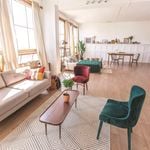
“The client wanted luxury but also comfort. We balanced marble finishes with warm lighting, plush bedding, and art pieces that told a story. In the balcony, we added cosy chairs so guests could enjoy sunsets, and a reading nook by the window to make it feel personal,” she says.
But good design, Diana says, is not just about the aesthetic; it needs to be functional. “A good mattress is non-negotiable,” she says.
“Décor matters, but guests remember how they slept. They also want functionality, a kitchen where they can cook, a workspace with proper lighting, and small luxuries like throws and indoor plants that bring calm,” she says.
“Design is an investment. When a place feels like home, the guests stay longer, leave better reviews, and the space will pay for itself,” she adds.