Taxpayers are spending more than Sh1 trillion annually to keep loss-making State corporations afloat, preventing private investments and suppressing growth in formal job openings for youth.
A joint survey by the World Bank and the Competition Authority of Kenya (CAK) has established that the government injects an equivalent of six to seven percent of gross domestic product (GDP) into under-performing State-owned enterprises (SOEs) every year.
The report says that majority of 209 government-linked entities survive on continuous injections of taxpayer funds despite delivering consistently poor performance rather than their commercial viability.
The support comes in form of structurally entrenched subsidies, bailouts, debt write-offs and loan guarantees — boost which not only consumes public resources but also distorts markets and crowds out private investment.
The report, which analysed the financial drain on taxpayers between financial year 2019/20 and 2023/24, puts the value of support in the year to June 2024 at Sh1.199 trillion, one of the highest levels globally.
The World Bank and CAK researchers cite neighbouring Tanzania, which has State corporation footprint that is comparable to Kenya’s but allocates 1.5 percent of GDP.
“To make up for their poor performance, SOEs are often subsidised, bailed out, or backstopped financially by GOK at great cost to Kenyan taxpayers,” the From Barriers to Bridges report states.
“SOEs also have financing advantages given their access to on-lent and government-guaranteed debt.”
The competitiveness report places Kenya third worst globally for market distortions created by public ownership of enterprises in key economic sectors, ranking only above Mexico and Türkiye.
The more than 200 SOEs in Kenya —one of the largest portfolios among emerging economies—operate across sectors such as energy, agriculture and transport.
The report says most struggle to meet basic financial and operational benchmarks. It, for example, puts the SOEs’ average labour productivity at 72 percent lower than comparable partially State-owned firms in other countries, reflecting long-standing governance weaknesses and a lack of competitive pressure.
“With the financial advantage of being able to run losses and/or receive financing below market rates, SOEs can squeeze out even more productive private competitors by offering suppliers higher prices and/or charging customers less,” the report states.
“In the short run, suppliers and customers of the SOEs benefit, but this comes at great fiscal cost and disincentivises private sector investments and productivity improvements—which in turn drive jobs and wages—in the long run.”
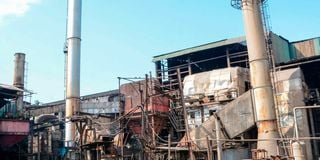
The report cites the sugar sector as offering a glaring example of decline that comes with entrenched inefficiencies despite heavy State bailouts.
The performance of six government-controlled sugar mills—South Nyanza Sugar (Sony), Mumias Sugar, Muhoroni Sugar, Chemelil Sugar, Nzoia Sugar and Miwani Sugar (which have since been leased to private investors)— has deteriorated despite decades of being propped up by the State.
The factories recorded more than Sh17 billion in net losses over the three years to June 2023, according to the report.
In the energy sector, entities such as Kenya Power and Kenya Electricity Transmission Company benefit from policy protections that prevent genuine competition and contribute to high electricity prices.
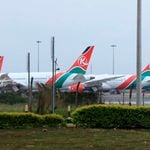
The report also cites Kenya Ports Authority and Kenya Railways in transport and logistics sector which continue to dominate systems that could be made more efficient and cost-competitive with greater private participation.
In fertiliser distribution, the role of the National Cereals and Produce Board has been singled out for discouraging competitive pricing and efficient delivery.
The Central Bank of Kenya (CBK) raised an early red flag in 2022 when it cautioned banks against indiscriminate lending to SOEs after discovering that many were using long-term commercial loans to pay salaries and other recurrent expenses rather than to fund investments.
“The SOEs used long-term debt to finance operations expenses rather than investments to generate revenues to service future debt,” the CBK warned, adding that the practice severely undermined the enterprises’ productivity and long-term viability.
The result has been a pattern of declining performance, mounting debt and recurring bailouts—one that weighs heavily on taxpayers while discouraging private-sector expansion.
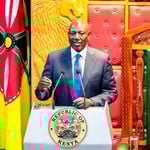
President William Ruto has in the past also acknowledged the crisis of continued State financial support to the SOEs, saying that many of them have become a “drain on the Exchequer”.
Dr Ruto told heads of parastatals at State House on March 26, 2024, that most SOEs have become financially unsustainable and criticised the culture of repeated bailouts for firms with overlapping mandates and years of losses.
“We cannot continue accumulating debt. Borrowing will only lead us down the cliff. We must get it right. We must do what is right. This is the time,” he said at the time. “It is illogical [to continue funding loss-making firms with duplicated and overlapping roles. We have to shut down some of these loss-making parastatals. We must end excess capacity.”
The report warns that that without reforms, Kenya will remain locked into a costly and inefficient SOE model that drains public resources while delivering minimal value.
It recommends phasing out unconditional fiscal transfers to commercial SOEs, ending debt bailouts except in cases with clear public service mandates, and linking any State support to strict performance targets.
The World Bank and CAK further suggests opening up protected sectors to competition, especially where SOEs crowd out more efficient private operators.