I recently arrived at the Jomo Kenyatta International Airport and stood by the luggage carousel to wait for my bags to emerge from the terminal’s bowels. As is the norm, many other passengers stood near the carousel as well.
The bags began to be ejected and I noticed that the ladies were struggling to lift their bags off the carousel as it is bordered by a high protective rim to keep the bags from spilling onto the ground. Not a single man attempted to help them.
I challenged two gentlemen who were standing next to me as I leaned forward to help one lady, asking them how they could stand by and watch two ladies struggle to lift the bags.
Needless to say, the two gentlemen stepped up to the plate immediately, and promptly assisted all the subsequent female attempts to get luggage from the carousel.
I am not trying to evoke a gender war, because I have also seen women walk past travelling mothers trying to balance a child on their hip, pushing a pram, carrying heavy jacket and two carry-on bags. In that case I stopped to help the visibly frazzled mother who was trying to fold and give the pram to the airline staff at the point of boarding the flight.
We all seem to be blissfully immersed in ourselves, not noticing the person beside us that may need 10 seconds of assistance to hold or lift something.
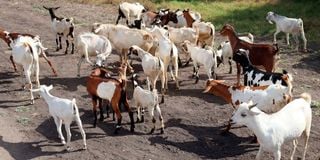
Let me tell you what else needs heavy lifting in this country: farming, shoat farming to be more specific.
If you’ve ever flirted with the idea of rural romanticism—think misty hills, bleating goats, and you in muddy gumboots looking indomitable—allow me to gently burst your rosy bubble. Rearing shoats (sheep and goats) in Kenya isn’t some rustic ode to Mother Nature. It’s a maddening dance with disease, market chaos and enough red tape to gift-wrap Parliament.
Let’s start with goats. These little four-legged anarchists possess the uncanny ability to break through fences designed by NASA engineers.
They nibble at everything from plastics, your recently planted pine tree seedlings up to and including your will to live. They then have the audacity to develop bloat and demand veterinary intervention that costs more than your last electricity bill.
Sheep, on the other hand, are walking soap operas. Prone to every illness imaginable from foot rot to parasites so prolific they could stage a national election, they require the emotional and financial investment of a small army.
Parasites like Haemonchus contortus (roundworm) affect nearly 70 percent of small ruminants if not treated routinely. Roundworms should actually have their own constituency and allowed to vote given their prevalence.
Consequently, a shoat farmer has to regularly deworm their flock and keep switching up the brand to avoid the animals developing resistance.
Let’s talk numbers. According to the Kenya National Bureau of Statistics livestock census, Kenya has over 27 million goats and 17 million sheep as of 2024.
But here’s the kicker: over 60 percent of smallholder farmers still rear indigenous breeds that struggle with disease resistance and low productivity. Indigenous breeds such as Galla goats and Red Maasai sheep are sturdy but offer lower meat and milk yields.
Feed costs have risen by an average of 40 percent over the past five years and vet services—if you can even find a licensed practitioner—can eat up 20–30 percent of livestock revenue annually.
Despite it all, there are many pockets of triumph. A few savvy farmers have turned to improved breeds, strategic feeding, and modern shelters with roofs that don’t cave in during the April rains.
There are hundreds of self produced, amateur YouTube videos teaching farmers how to build shelters, what to feed their animals and how to care for them.
I have to give a shout-out to my Ugandan and Zimbabwean farmer colleagues who have extensive content in this regard and from whom I have learnt a whole lot. Other shoat breeders run farmer groups via WhatsApp with a lot of information freely shared on those forums and invite farmers to come to their farms to learn.
So if you're considering entering the livestock arena, do it with eyes wide open and boots firmly laced.
There are no heroes in capes waiting to help you lift the weight of your ignorance. The real heroes are the gritty farmers who keep showing up despite the madness and the wannabe farmers who dive into the livestock arena ignorant but armed with optimism, stubbornness, and a prayer!
The writer is a corporate governance specialist and a former banker. X: @carolmusyoka
Unlock a world of exclusive content today!Unlock a world of exclusive content today!