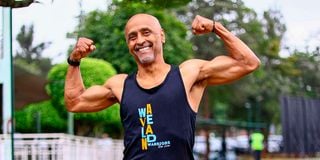
It is a wintry Friday morning when Sidney Joseph Anderson, 62, finishes his one-and-a-half-hour speed workout in Lavington, Nairobi. His build is a testament to years of hard work, discipline and dedication.
He considers his life a pilgrimage and wellness as his Mecca. He is a man on a journey to a higher dimension through fitness.
“Fitness is the background music that is constantly playing in my life,” says the certified fitness coach. He sees fitness not just as an exercise, but as an act of reclaiming his life.
His darkest years, marked by depression, financial hardship and declining health, showed him how fragile life could become without taking intentional action.
“I run because I want to live. I train because I’m afraid of dying unfulfilled.”
From 2008 to 2017, his life fell apart. His once athletic frame deteriorated. His workout shoes gathered dust.
Living in Dallas, separated from his children and under the immense pressure that comes with adulthood, he began gaining weight. He was constantly tired. Going up a flight of stairs left him winded. The mirror showed someone he no longer recognised. “There were 10 years I didn’t work out. The worst 10 years of my life,” he says.
He’d gone from a man with a five percent body fat and top army fitness scores to someone struggling with weight, a busted smile from unresolved military dental injuries, and the crushing weight of shame and depression. But something inside him refused to quit.
“I was metabolically unfit, my mood and attitude were off the roof, and I generally felt bad about my whole existence.”
His situation was exacerbated by the death of a friend he had grown up with. “He had a mild stroke, and in a short while, he was gone. This reminded me of losing my sister to cancer when I was a boy. I reminded myself that fitness can reduce the chances of such fatalities, and this may have been the push I needed.”
An impregnable ego
His long climb back started with a second-hand bicycle he acquired when he relocated back to Chicago. His elder brother held his hand, a fact he acknowledges was among the reasons he never quit on regaining his former poise.
“The support I had from him built an impregnable ego. ‘What do I become if I quit?’” This question was a blip in the darkness he endured.
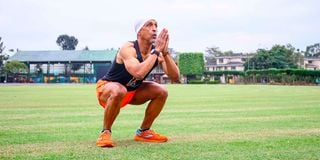
Sidney Anderson performs squats as part of his fitness routine.
Photo credit: Wilfred Nyangaresi | Nation Media Group
“Many people work out for different reasons, and fitness serves many distinct purposes in different people’s lives. For me, it is a story of overcoming,” he shares.
Riding turned into walking. Walking turned into slow jogs. Then came tears, pulled muscles and discouragement, but he didn’t quit.
“I had gained 24 kilos over the ten years I lived a sedentary life. In the first year of my comeback, I lost twelve.”
In 2020, Sidney completed his first 5km run since his decline, finishing in 33 minutes with walking breaks. A year later, he was clocking 30 minutes. Then 27. Then 25 minutes. Today, he runs it in 19 minutes, the same pace he had in 1985.
But he’s quick to remind anyone who will listen that, “This is not about heroism. It’s about habits. Rituals. Recovery. And making peace with your own body again.”
He doesn’t just run. It is a comprehensive workout regimen that is deliberate and purposeful. His focus is longevity, strength, and energy.
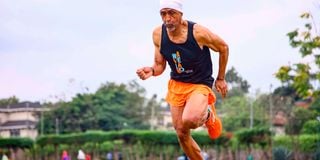
Sidney Anderson sprints during his fitness routine.
Photo credit: Wilfred Nyangaresi | Nation Media Group
He regularly does push-ups, pull-ups, squats and other bodyweight movements. “Strength training is central to my routine, particularly for maintaining muscle and bone health. I include short sprints and 5K runs, steering clear of overtraining. I believe excessive mileage can be harmful as one ages.”
For flexibility and mobility, Sidney incorporates daily stretches with a focus on hip and shoulder mobility to stay agile and injury-free.
The young elder, as he prefers to be called, has another trinity up his sleeves: meditation, clean eating and quality sleep.
“Fitness is much more than aesthetics and muscles. My mornings begin with ten minutes of silence. No phone, no news, just breath. This helps me to stay grounded, focused, and emotionally balanced. You have to have a relationship with your body, and this is one of the ways of going back to your core self. This entity you are trying to build. All things you plan and work for must have a good landing, that is, your body. My phone doesn’t go to the bedroom, so it is not the first thing I look at when I wake up. That way, I am looking inward. I commune with myself.”
He cooks most of his meals and avoids processed foods, sugars and alcohol. His meals are rich in protein and healthy fats, eggs, greens, nuts and lean meats. Sweet potatoes and fruits are consumed in moderation.
His sleep is sacred. “Rest is the foundation. You don’t grow stronger in the gym, you grow stronger while sleeping.” He finishes eating at least two hours before bed and must sleep for at least six and a half hours. “This is not up for debate. It is scientific, high-quality rest that regenerates your body. When you have wasted away, on the road, or in the gym, your rest is your recovery. Do not neglect rest.”
Moving to Nairobi
Coach Sid, as he is known to his mentees, moved to Nairobi 10 months ago. “Immediately I touched down, I started looking for ways I could plug myself into fitness groups.”
He runs regularly with his running club. “I have done a half-marathon in the Kilimanjaro Marathon and the Nairobi City Marathon. Being in a community ensures you have accountability partners who help you remain on your path. It is not every day that you will have motivation and discipline; many times, it is costly. Accountability partners ensure you don’t fall off. However, he doesn’t buy the idea that everyone must run marathons to be considered fit.
“You want to stay young? Don’t worship the marathon,” he says. Instead, he recommends a mix of sprints, callisthenics, grip strength exercises and flexibility training.
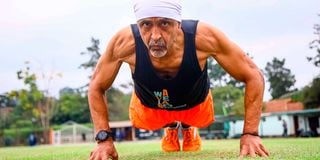
Sidney Anderson does push-ups. His focus is longevity, strength and energy.
Photo credit: Wilfred Nyangaresi | Nation Media Group
“Most people train for medals. I train so I can catch myself if I fall.” He warns that too much endurance training, especially past 40, can disrupt hormones and wear down the body. His focus now is on maintaining testosterone, mobility, and strength. “At this age, recovery is just as important as the workout itself.”
What lessons has he learned over time? “Discipline is freedom. Daily structure saved my life. Motivation fades, but disciplined habits—like training, fasting, and meditating—are the foundation of transformation. Secondly, recovery is strength. I have learned that healing, not just hustle, powers progress. Clean sleep, nutrition, and time off are non-negotiable.”
Lastly, fitness is spiritual, he says. “Fitness goes beyond reps and runs. It’s about presence, gratitude, and showing up fully for the people you love.”