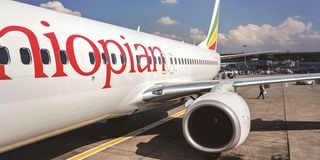
A recent decision by a regional competition watchdog that forced Ethiopian Airlines to compensate travellers for damaged luggage has set a precedent that could force other airlines to revise their baggage policies to reduce exposure to claims.
The Comesa Competition Commission also forced Ethiopian to change its baggage handling policies —bringing greater clarity on risks and obligations between the carrier and its customers– following a consumer protection investigation triggered by complaints from four passengers.
Prior to the conclusion of the investigation, Ethiopian Airline wrote to the watchdog agreeing to compensate the four passengers, thereby avoiding further punishment.
The four Sudanese nationals, reported that their checked-in luggage had been opened, damaged and valuable items including mobile phones lost during transit.
The incidents were on different Ethiopian Airline flights they boarded between November 17, 2020 and December 13, 2020.
Ethiopian Airlines initially refused to compensate the customers, citing internal baggage terms that excluded liability for “valuable and fragile items” that should have been declared.
However, the commission found this conduct to be misleading and unconscionable, particularly as the airline failed to clearly inform passengers about these exclusions in advance.
The ruling implies that airlines cannot use broad disclaimers to avoid liability, especially when passengers are not properly advised at the time of check-in or ticket purchase.
The commission’s findings could prompt other airlines operating within the Common Market for Eastern and Southern Africa (Comesa) —including Kenya Airways, Emirates, EgyptAir, and South African Airways— to review their baggage policies for greater clarity so as to cut exposure to compensation claims.
“The commission shall continue to monitor the market operations of the aviation sector to ensure that consumer rights are upheld,” said the commission in the ruling.
The watchdog said Ethiopia Airline’s conduct flouted Article 18 of the Montreal Convention for the Unification of Certain Rules for International Carriage by Air, which provides that airlines are liable for damage to passengers' cargo during the carriage by air.
Further, the commission observed that the terms and conditions the airline had displayed on its website listed electronic devices that are not allowed in the check-in baggage, with mobile phones clearly indicated for the US and Canada routes. However, this was not specified for other routes.
“The terms and conditions, however, did not elaborate on what was prohibited for other routes, including the Comesa region, and only provided an overarching condition that fragile and valuable items were not allowed in the check-in baggage,” notes the commission.
The commission said Ethiopian Airlines’ conduct of providing detailed information to passengers to the US and Canada while providing less information to those traveling to other routes was “discriminatory and possibly unconscionable.”
The airline also pulled down the terms and conditions the commission found discriminating, saying that passengers will now be guided by the overall conditions of carriage —the airline’s guide on ticketing and baggage rules and policies on compensation for delays, cancellations and denied boarding.