Psychology is emerging as one of the thriving professions in Kenya, due to the rising mental health awareness and a growing middle class willing to pay between Sh4,000 and Sh9,000 an hour for therapy.
Yet behind this career’s newfound prosperity lies a quieter struggle: the emotional toll on those who spend their days listening to other people’s pain. As demand surges, psychologists, BDLife spoke to a few of them on how they confront burnout, compassion fatigue, and the challenge of caring for themselves while caring for others.
Washington Kariuki’s journey to becoming a psychologist began with a personal struggle. After being expelled from school in Form Four, he felt like his world had fallen apart. “It was a humbling period of searching for meaning and direction,” he says.
A friend suggested therapy, a simple act that would change his life forever.
“Sitting in those therapy sessions, I experienced healing in a way I had never known before,” he says. “It helped me rediscover who I was beyond the shame, confusion, and disappointment of that moment.”
That experience didn’t just restore him; it awakened a calling. He realised how many people walk through life carrying invisible wounds, pain they never voice, grief they never process.
He wanted to create spaces where they could be heard and held. That’s how he found his way to Tangaza University College, where he pursued psychology.
Today, Washington, 35, works with a private international non-governmental organisation, his schedule flexible enough to allow him to balance the emotional demands of his work.
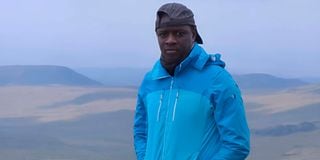
Washington Kariuki has been practising psychology since 2014. He enjoys hiking once a month as a way of decompressing.
Photo credit: Pool
He is a member of the Counsellors and Psychologists Board, (a professional body responsible for the ethical standards in mental health practice), the Positive Psychology Association of Kenya, and the American Psychological Association in the United States.
But his curiosity didn’t stop at Western psychology. Later, he joined the Maryknoll Institute of African Studies, studying African tradition and spirituality in collaboration with Saint Mary’s University of Minnesota.
“Many of our emotional experiences and ways of healing are rooted in culture, spirituality, and community,” he explains. “I wanted to bridge modern psychology with indigenous African worldviews to help people heal in ways that honour both their psychological and cultural identities.” He has been practising since 2014, and over time, his work has evolved to become both scientific and deeply human.
The work of a psychologist is both noble and heavy. “Compassion fatigue is real,” Washington admits. “It’s like running out of emotional oxygen.” After hours of listening to trauma and grief, I often find myself emotionally drained, unable to switch off.
He recalls some of the most emotionally demanding moments of his career, working at the Kakuma Refugee Camp, surrounded by people who had lost everything. “There were days I sat across from someone who had seen lifeless bodies or fled war. The helplessness in their eyes would stay with me long after the session,” he says.
He has also worked with offenders living with mental conditions, a task that demands immense empathy. “Supporting people who have caused harm but are also victims of pain requires holding complex emotions, compassion, accountability, and humanity, all at once.” Still, Washington shows up. Every day. “Healing, even in small ways, still matters,” he says.
But holding other people’s pain requires boundaries – ethical, emotional, and spiritual ones. “In Kenya, we often work in close-knit communities where everyone knows everyone. You may meet a client in church or at the market. They may ask to talk right there, but you have to balance professionalism with human connection.”
After years in the field, he has learned that emotional strength isn’t about being unshakable. “We, too, are human,” he says. “We feel, absorb, and empathise deeply. Being composed doesn’t mean being emotionless; it means being able to hold space for others while still being honest about our own humanity.”
His way of regaining balance is rooted in movement and mindfulness. “Nature heals me,” he says. “I hike, run, or spend time in the mountains. There’s something symbolic about standing on a mountain; it reminds me of perspective, resilience, and stillness.”
When he’s not in session, you might find him at the gym or watching a rugby match. “Rugby gives me joy and connection,” he says. “It’s a reminder of rhythm, resilience, and teamwork, the same things that keep me grounded in my work.”
But not all coping methods have worked for him. “I once thought watching TV or scrolling on my phone was enough to unwind, but that only numbed the fatigue,” he admits. “True rest comes from intentional spaces: silence, solitude, and movement. It’s not about escaping tiredness but restoring the spirit.”
At home, Washington is deliberate about drawing a line between his professional and personal life. “After a long day, I take walks, go to the gym or quiet reflection,” he says. “When I walk through my door, I allow myself to just be Washington, not the psychologist.”
“My family doesn’t need therapy sessions; they need my laughter, my presence, my humanity,” he adds.
Though psychology often intertwines with his personal life, he tries to keep it natural. “Empathy and listening show up in how I relate to people, but I don’t analyse my loved ones,” he says. “At home, I allow myself to be vulnerable too, to share, to seek support.”
Is psychology financially sustainable in Kenya? “It is improving. When I began, opportunities were few, but awareness around mental health is growing. I’ve been fortunate to earn well; my highest monthly pay has been Sh230,000, but for me, sustainability isn’t just about the paycheck.” “It’s about emotional balance, professional growth, and being able to serve others without losing yourself,” he says.
For him, true success isn’t measured in figures or fame. “When a client begins to breathe again after weeks of despair, when tears turn into laughter, or when someone finds the courage to forgive themselves, that’s success.”
‘I enjoy journaling’
Grace Wambui, 27, had interests in the mass media and communication field.
Grace Wambui started practising psychology in early 2020. After long or difficult sessions, she unwinds through journaling.
Photo credit: Pool
“When I was applying for courses, my dad suggested I fill in general psychology to complete the form,” she recalls. “He said I loved talking to people and had a way of commanding a room. That’s how I found myself in this career, and I’ve grown to love it.”
She began her practice in early 2022 after graduating with a Bachelor’s degree in psychology from Kenyatta University. She later went for her attachment at Mama Lucy Hospital, an experience she says laid the foundation for her work as a practicing psychologist.
Also, a member of the Counsellors and Psychologists Board in Kenya, she enjoys helping people to understand themselves, heal, and grow. “Seeing those moments of realisation and resilience is deeply fulfilling,” she says.
Working full-time and scheduled appointments on weekends with clients in a private organisation, Grace has come to appreciate both the beauty and the burden of her chosen path.
But there’s one misconception she often encounters. “People think I can read minds,” she laughs. “Once I mention I’m a psychologist, that’s the first question I get. In truth, our work involves understanding behaviour, emotions, and thought patterns, then helping people change or strengthen them.”
Many assume psychologists are always calm and composed. “It comes with the job. I’m trained to stay composed, even when listening to painful experiences. The client is seeking help, not emotional reactions from me either,” she says.
Yet, the emotional toll can be heavy. “The biggest challenge I’ve faced so far is the emotional burden,” Grace admits. “Sometimes life keeps moving, and I don’t take time to debrief. Those suppressed emotions can later burst and affect my day-to-day experiences. But I’ve learned to recognise when I’m emotionally fatigued. That’s when I take a break.”
She acknowledges that psychologists are human too. “Sometimes the mask cracks. When emotions become overwhelming, I take a break or refer a client. Emotional exhaustion is part of the work.”
Some cases are particularly heavy. She mostly handles gender-based violence cases. “Those involving minors are the most difficult. They often involve disturbing experiences of defilement or abuse. It becomes even harder when guardians withdraw complaints,” she says.
Before becoming a psychologist, Grace relied on listening to music and spending time in nature “Now I’m more intentional with mindfulness, emotional regulation, and setting boundaries. Reflective practice helps me manage emotional demands better.”
After long or difficult sessions, she unwinds through creative outlets. “I paint, attend outdoor events with friends, and journal. It helps me relax and express myself.”
On weekends, she prefers reading fantasy stories to help her relax and make her journaling more imaginative. Her recovery time depends on the week. “If it’s been intense, I take a few hours to rest or journal. When I feel emotionally tired, I take time off to recharge.”
She maintains clear boundaries between work and personal life. “Once I leave the office, I switch off. I spend time with family by watching movies, or help with house chores. It keeps me grounded.”
Still, psychology is part of who she is. It’s not something she can turn off, but she adjusts to it. “At home, I’m more relaxed and personal, not a counsellor, but a partner or friend. I listen with empathy but without being clinical.”
Depending on experience, specialisation, whether you work in the public or private sector, and how much you earn from your practice or side tasks, Grace says psychology can be financially viable.
Her highest earnings per session have been Sh4,500 for 45 minutes. But for her, fulfilment outweighs figures. “Success isn’t in the number of clients or money. It is in seeing someone regain confidence, peace, or purpose. Those thank-you notes and follow-ups mean everything.”
The calmness isn’t detachment; it’s discipline. Her empathy isn’t a weakness but a strength. “Healing isn’t one-sided,” she reflects. “It happens on both sides of the session. As I help others, I keep learning and growing too.”
‘I go for debrief sessions’
For as long as she can remember, Nelius Njuguna, 26, has been drawn to helping people. As a child, she dreamt of becoming a doctor until she discovered she couldn’t stomach the sight of blood or dead bodies.
Nelius Njuguna began practising psychology while still at university in 2021. She attends debrief sessions with fellow psychologists to grow professionally and care for her own wellbeing.
Photo credit: Pool
“I realised that part of medicine wasn’t for me,” she opens up. “But I still wanted to help people in a meaningful way. That’s how I found psychology. I feel like therapy is a calling, much like teaching.”
Though psychology wasn’t her first choice, Nelius believes she ended up exactly where she was meant to be. She started back at Moi University in 2021 and later went for her attachment at Mathare National Teaching and Referral Hospital.
“If I ever had to shift careers, ironically, I don’t think I would. I feel like I’m where I’m supposed to be,” she says.
She currently works as a consultant psychologist with a private organisation, clocking in from 8am to 5pm. Besides that, she is a member of the Counsellors and Psychologists Board of Kenya.
Her greatest joy lies in seeing lives transform. “What I love most about being a psychologist is that I get to impact people’s lives. I help them realise their potential and set themselves up for greatness,” she says. “When I see someone move from confusion or pain to purpose and confidence, it reminds me that we all have the potential to be great, something I’m still working through myself.”
Still, the work can take an emotional toll. She says, people often think that psychologists fix people’s lives, yet they just help guide them back to themselves. “It’s about walking the journey with them, not dictating the path,” she adds.
Nelius quickly dispels the myth that psychologists are always composed. “No, not always,” she laughs. “I feel just as much as the next person. The difference is that I’ve learnt how to better manage my emotions, which helps me navigate life more steadily.”
Learning to switch off her mind after work has also been one of her biggest challenges.
“Sometimes it’s hard to stop thinking about my clients,” she admits. “But I’ve learnt that I can’t be everything to everyone. I’ve learnt to refer even people close to me to other psychologists so that I can separate my professional and personal life.”
She admits that some cases linger long after sessions end. “I can’t break confidentiality, but some cases are heavier than others. At the end of the day, I’m only human, and some of them do get to me,” she says. Before she trained as a psychologist, Nelius didn’t always have the healthiest ways to deal with emotional pressure.
“When the going got tough, I’d have a mental breakdown,” she says candidly. “I still get those moments, but I’m in a much better place mentally now. I’m still learning. As humans, we’re always evolving and growing.”
Her self-awareness has grown with time. “I’ve learnt that feeling emotions isn’t a weakness, it’s part of being alive. The key is how you respond to them.”
Asked about the financial side of psychology, she offers a candid answer, too. “Sometimes it feels like the work you put in doesn’t always match the compensation. This is a field you get into out of passion,” she says.
When the week has been emotionally charged, Nelius retreats inward. “My favourite way to decompress is meditation,” she says. “I like to reflect and then clear my head to prepare for what’s next.”
She also journals, a habit she finds both grounding and freeing.
“Journaling helps me make sense of my thoughts. I encourage everyone to find what works for them, but for me, writing clears the noise.” Rest, she adds, is non-negotiable.
“When I feel I’m at the verge of a breakdown, I take time to collect myself and go for debrief sessions. Yes, psychologists go to therapy too,” she says with a smile. “It helps me be in a better position to help my clients.” Breaks, for her, aren’t scheduled by the clock but by instinct. There were coping methods that didn’t work.
“I used to use partying as my way to decompress,” she says. “I love music and dancing, but I realised it wasn’t helping me heal. It was just noise masking exhaustion.”
Even outside her practice, Nelius finds that her work shapes how she relates to others. “You have to show up for people the way they want you to, not the way you think they need you to,” she says. “Some people want advice, others just want to vent. I try to be who they need me to be in that moment.”
This ability to switch between being a professional listener and a present friend helps her maintain balance. “I try not to bring work home. I’m intentional about being there for my loved ones without turning every conversation into a session.”