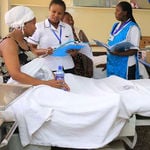
A few years ago, nursing colleges never saw A students lining up to fill the classes. The demand was there too, but not so high that waiting time runs to three years.
Nursing training demand is outpacing slots in Kenyan colleges, with thousands of qualified students being locked out of the programmes because the classes are full.
At Pumwani Maternity College of Nursing and Midwifery in Nairobi, the numbers are staggering and growing by the day.
According to Alfred Obengo, a board member at the institution and former president of the National Nurses Association of Kenya, demand for places has reached unprecedented levels. “There’s been exponential growth. Our applications are already full up to 2027,” he tells BDLife.
For each intake, the college receives more than 400 applications, yet it has only two classes, each training 40 to 45 students. With two intakes a year, in March and September, only a fraction of those who dream of being nurses ever make it in.
The entry requirement to join is a mean grade of C plain in KCSE or its equivalent, but students with this score are competing for space with A students who have dropped out of university to attend nursing school.
The reasons are clear. Kenya’s job market has shrunk, marred by frequent strikes and uncertain employment opportunities. Nursing, however, offers a clearer path not only in Kenya but also abroad, where developed countries face a serious shortage of healthcare workers.
“For many, there’s also the expectation of flying out for greener pastures,” Mr Obengo says.
A diploma in nursing is also seen as more affordable, at Sh205,000 a year, compared to a university degree, and with high prospects of getting a job.
“About 90 percent of the applicants who book actually show up,” Mr Obengo adds.
Yet despite the huge demand, the colleges cannot admit more students and quickly build more classes.
Alfred Obengo, President Emeritus of the National Nurses Association of Kenya, during an interview at Nation Centre, Nairobi, on April 5, 2024.
Photo credit: Bonface Bogita | Nation Media Group
“We have what we call a Master Rotation Plan,” Mr Obengo explains. “It ensures that whenever we take students out to county hospitals for clinical experience, the numbers are balanced with the opportunities available. You don’t want 80 students crowding one hospital ward. So we distribute them fairly and scientifically, to guarantee optimum training and supervision.”
It’s a system designed to ensure that, despite the overwhelming interest, every student gets more than just a certificate; they get the hands-on experience that will make them competent, confident and globally competitive nurses.
At AIC Kijabe College of Health Sciences, the story is the same. Dr Peris Kariuki, the college principal, confirms what many in the industry have been observing: “Yes, we have seen a noticeable increase in the number of students applying for our nursing programmes over the past two years.”
Globally, nurses are in short supply, and many countries are actively recruiting from developing nations like Kenya. For young graduates, overseas opportunities have never felt closer.
“The higher demand for nurses overseas, coupled with the growing presence of agencies that facilitate migration for nursing graduates, has greatly influenced applications,” she explains.
Even with the heightened interest, the institution maintains firm admission standards. The diploma in nursing at Kijabe runs for three years, with each semester costing Sh56,000.
Students must have at least a C in KCSE, a C or above in either English or Kiswahili, and at least a C– in Mathematics or Chemistry. These requirements, she notes, have remained consistent over time and are aligned with the standards set by regulators.
But what has changed is the pressure on admissions. Like other top nursing colleges in Kenya, AIC Kijabe College of Health Sciences is already fully booked until September 2026. Each year, hundreds of hopefuls apply, but only a limited number are taken in.
“For many years, our maximum intake was 30 students per class,” says Dr Kariuki. “However, after the addition of more classrooms, we will increase our capacity to 40 per class beginning with the September 2025 intake.”
This growth is a result of the college’s attempts to adjust to the high number of students enrolling for the course while maintaining quality control, as well as the rising demand.
“Our class sizes are dictated by the resources available and adjusted accordingly to meet demand. We are committed to maintaining quality and are not driven by numbers,” she adds.
At Nairobi Hospital, they no longer advertise; classes are always full.
“For the last four years, we haven’t advertised for our Kenya Registered Nursing programme. The classes are always full. We even have a waiting list,” says Dr Margaret Sirima, principal at The Nairobi Hospital Cicely McDonell College of Health Sciences.
That list is not short. By October last year, applications had already covered intakes for 2025 and 2026. Out of more than 300 eager candidates, only 170 made the shortlist.
Yet the college only admits 40 students per class, with two intakes a year, just 80 students in total.
“Sometimes students wait between one and a half to two years before they can get in,” she says. Already, allocations stretch as far as 2028.
The financial commitment is also hefty. A diploma in nursing costs Sh221 000 per year. Still, applications keep flooding in, even from students who already qualify for university degrees.
“We’ve had students with Bs and C+ averages who choose to join our diploma classes instead of pursuing other courses,” she says. “For many, it’s about strategy. In three years, they’re done and earning, and can later upgrade to a degree in just two to two-and-a-half years on a part-time basis.”
So what is driving this overwhelming demand? Dr Sirima points to a global shift. Around the world, especially in developed countries, the nursing shortage has grown acute.
“It’s partly because of the ageing populations and also what happened post-Covid,” she says. “Many healthcare workers succumbed, others left practice, and many more suffered burnout. Countries such as Germany, Japan, and Austria are now looking to Kenya and other developing nations to fill the gap.”
Some of these countries have gone as far as offering language training and fast-track recruitment, often hiring within a year of graduation. For young Kenyans, the appeal of such opportunities is obvious.
Still, the path to nursing is tightly regulated. The college admits students under guidelines set by the Nursing Council of Kenya, which requires a minimum grade of C. Despite that baseline, Dr Sirima observes, many of their students exceed it and not just from Kenya.
“We even have applicants from countries like Nigeria and Rwanda,” she adds.
The college maintains its intake capacity deliberately. Each lecture theatre accommodates 40 students to preserve quality and ensure close mentorship. “We don’t just teach theory. When students go out into the clinical areas, we follow them up. We even do one-on-one coaching,” she says.
Beyond the core diploma programme, the institution also designs higher diploma courses that respond to Kenya’s pressing health needs. These include specialities such as critical care, trauma and emergency, oncology, nephrology, perioperative, and neonatal nursing.
However, enrolment in these advanced programmes tends to be lower, not due to lack of interest, but because of financial constraints. To ease the burden, the college has partnered with the Higher Education Loans Board to offer loans.
Private universities
Private universities, too, are now reporting a sharp rise in applications for the Bachelor of Science in Nursing (direct Entry, four-year programme).
At Aga Khan University’s School of Nursing and Midwifery, Dr Isabel Kambo, the Associate Dean at the Aga Khan University School of Nursing and Midwifery, says the applications are rising steadily.
Dr Isabel Kambo, the Associate Dean at the Aga Khan University School of Nursing and Midwifery.
Photo credit: File | Nation Media Group
“Traditionally, the increase in nursing applications was more visible in public universities,” she explains. “But now we’re seeing the same trend in private universities, including ours. The demand is undeniable.”
So what is fuelling this appetite for nursing?
Dr Kambo points out that global healthcare needs have increased due to the widespread ageing population, the increase in chronic diseases, and health workforce shortages. This has created a hunger for nurses, not just in wealthy nations but also in low- and middle-income countries.
“It’s no secret that middle- and high-income countries offer better pay and easier visa pathways for nurses,” she says. “For many, nursing is a sure ticket to a livelihood abroad. It’s a profession that assures stability and opens doors.”
Kenya’s public sector remains the biggest employer of nurses, but limited budget allocations mean only a few can be absorbed at any given time.
Even when opportunities exist, challenges persist. “Many nurses go months without a salary in some counties, and overall pay is still lower compared to wealthier countries,” Dr Kambo explains.
The profession remains one of the most reliable paths to employment. “Nursing guarantees a steady job compared to many other professions,” she adds. “The real issue is distribution, as more nurses prefer to work in urban centres and towns rather than in rural or remote areas.”
At the institution, the entry bar is set by the Nursing Council of Kenya. Students must have at least a C+ in their KCSE results, costing Sh200,000 per semester, with two semesters in a year.
With the rising numbers, the university ensures quality isn’t diluted through leaning on partnerships.
“The demand for clinical placement opportunities is intense, but we plan ahead of time,” she says. “We collaborate with approved institutions to secure spaces, and we ensure each student has faculty or preceptor support, especially in areas where hospitals are understaffed or patient numbers are overwhelming.”
At the Kenya Medical Training College (KMTC), which is the country’s main training hub for nurses, a staggering 56,516 students applied for admission. Yet, due to limited capacity, only 19,653 were successfully placed, leaving more than 36,000 applicants unplaced. The approved capacity for KMTC programmes stands at just 17,172 slots, far below the number of applicants.
Mr Obengo notes it’s not just average students applying. “We are seeing young people with A and B grades who could easily pursue law, engineering, or even medicine, choosing nursing diplomas instead.”
Some even go as far as leaving prestigious university courses mid-way to join nursing colleges.
“Others travel abroad, and once they get there, they drop whatever career they were pursuing to study nursing because the pay overseas is far better than in Kenya,” he says.
Kenya’s nursing colleges are overwhelmed, locking out thousands of qualified students amid a global nurse shortage.
Photo credit: Shutterstock
A 19-year-old Lavender Bartai is among those who have faced disappointment for failure to secure a place at KMTC.
“The slots were full. I was crushed,” she says. “At first, I believed that with my good general grade, I would automatically get a slot at the university. But after many failed trials, I realised my nursing career had been shut out for now.”
Lavender made a decision to pursue a degree in Education at Maseno University. “At first, it wasn’t easy to let go of nursing,” she admits.
Like Lavender, Stephanie Chepkirui, 19, the dream had always been clear: nursing. Her motivation was deeply personal. But as the university placement results came in, she didn’t get in. “I felt disappointed. You put in so much effort, and when you fall short, it stings.”
Unscrupulous business
However, Mr Obengo warns that the high demand has opened the gate for unscrupulous business.
“That’s why, as a council, we once proposed mapping colleges geographically so that we don’t oversaturate one area with nursing schools, while others remain underserved. It’s about balance, and most importantly, about ensuring we produce quality over quantity.”
He cautions that Kenya must remain vigilant.
“We have to take care of the labour market so that nursing colleges don’t just operate for the sake of business. There’s demand, yes, but if we don’t safeguard quality, we will produce graduates who can’t serve effectively, either here at home or overseas.”