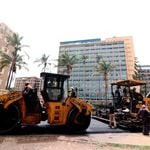
How safe are workers’ savings in the Sh160 billion Nairobi–Nakuru–Mau Summit highway, where the National Social Security Fund (NSSF) has taken a 40 percent equity stake?
The mandatory pension fund is partnering with China Roads and Bridges Corporation (CRBC) on a 40:60 basis, to finance the massive road under a 30-year Public Private Partnership (PPP) deal.
The key questions are: What are the likely implications for the fund’s liquidity and ability to pay retirees promptly? And what returns can be expected compared to other asset classes?
The NSSF has entered into new territory. Historically, it has been a poor investor—buying quarries and idle land, losing billions in scandals such as Discount Securities, Sololo Outlets and collapsed banks where elites parked pensioners’ money. Could this project become another sinkhole for billions?
Going through the transaction documents, the structure appears more sophisticated. A great deal of disclosures, including risk-sharing arrangements expected returns, traffic forecasts and tolling models are disclosed.
A special purpose vehicle (SPV) will issue bonds to raise most of the project’s financing, limiting NSSF’s direct cash exposure. Mark you, the fund is currently now worth about Sh600 billion, buoyed by higher contribution rates under the NSSF Act of 2013. The fund currently collects about Sh6 billion a month.
At this scale, NSSF must now seek long-term, bankable investments. Trends in the rest of the World show that infrastructure offers potentially higher and more stable returns than traditional assets. Since the fund collects long-term savings, it makes sense to deploy them in long-term projects—roads, energy, and airports.
Kenya’s pension funds, collectively holding about Sh2 trillion, remain overly conservative: around 80 percent of their portfolios sit in government securities and listed equities, with limited exposure to real estate or private equity. Globally, however, pension funds are key players in infrastructure.
The UK Universities Pension Fund invested in Heathrow Airport’s expansion; New Zealand’s Unispur Fund financed Adelaide Airport and Australia’s Superannuation Fund has stakes in several airports. In Denmark, Copenhagen Airport’s expansion was partly funded by pension money.
Closer home, the Nairobi Expressway now generates about $50 million annually in toll revenue—demonstrating the potential of well-structured PPPs. NSSF’s participation in the Nairobi–Mau Summit project, therefore, marks a welcome evolution in how Kenya’s pension capital is deployed.
Globally, pension funds are integral to national economic strategies. Canada recently underscored this by appointing Marc-André Blanchard, a top executive from one of its biggest pension managers, as the Prime Minister’s chief of staff—a signal of how seriously prudent economies treat pension fund governance.
Traffic projections along the Nairobi–Nakuru–Mau Summit corridor highlight why the expansion is urgent. Traffic on the Naivasha–Gilgil section alone is projected to reach 23,000 vehicles per day by 2027.
Without expansion, congestion will cripple trade within the Northern Corridor—the vital artery linking the Port of Mombasa to Uganda, Rwanda, and South Sudan.
Yet, Kenya continues to lag in adopting innovative financing models for infrastructure. In contrast, Tanzania’s NSSF financed 60 percent of the $130 million Nyerere (Kigamboni) Bridge under a 30-year PPP concession. Uganda’s NSSF is a key investor in Umeme Ltd’s power distribution network. South Africa’s Government Employees Pension Fund, through the Public Investment Corporation, co-owns several toll roads, including the Pretoria–Maputo and Johannesburg–Durban highways, sharing toll revenues for decades.
Kenya’s pension sector missed out on the Nairobi Expressway—arguably the country’s most successful PPP. The new 175 km Nairobi–Nakuru–Mau Summit highway, at an estimated cost of Sh170 billion, offers a second chance. The Rironi–Nakuru–Mai Mahiu stretch is among the most congested in the Northern Corridor, carrying about 20,000 vehicles daily, growing at 4 percent annually. The expansion will reduce travel times, accidents, and freight costs—critical for industrial hubs like Naivasha, Nakuru, and Gilgil.
This project is coming to complement other key investments we are making on the Northern Corridor including the Standard Gauge Railway extension to Malaba. In sum, NSSF’s participation in the Nairobi–Mau Summit project could set a new benchmark for mobilising domestic savings for development.
NSSF’s partner in the deal, CRBC, has very strong credentials in as far as experience and capacity to execute is concerned, with some of the big projects completed including the SGR, the Nairobi Expressway and the Nairobi by- passes.
If managed prudently, this investment could redefine how Kenya’s pension savings are harnessed for growth—turning idle deposits into productive capital. Done right, it will demonstrate that pension funds can be both safe custodians of workers’ savings and engines of national development.
The writer is a former managing director of The EastAfrican.
Unlock a world of exclusive content today!Unlock a world of exclusive content today!