Wholesale prices of electricity will be capped at $0.07 (Sh9.04 at current exchange rates) per kilowatt-hour (kWh) for new Power Purchase Agreements (PPAs) that Kenya Power will sign in a move aimed at cushioning consumers from costly electricity.
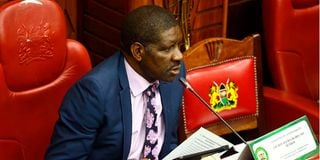
David Gikaria, the chair of the National Assembly Energy Committee, disclosed that capping of the prices is one of the conditions included in a report that his committee will table in Parliament, setting the stage for lifting of a moratorium that has been in place since 2018.
He said the proposed price caps are based on a study of other countries' power price structures.
Cabinet lifted the freeze in 2022 but MPs reinstated it the following year saying that extension of the moratorium will allow for scrutiny on the existing PPAs that have been cited as being punitive to consumers.
The price at which power producers sell electricity to Kenya Power is the biggest hurdle that has denied consumers cheap electricity with some producers selling a kWh for Sh56.
Locally-generated hydropower is the cheapest with the wholesale price averaging Sh3.83 per kWh according to official data early last year, followed by hydropower from Ethiopia at Sh8.44 and geothermal at Sh10.28.
“Two of the critical things we agreed with the ministry is that the price should not exceed $7 cents for any new PPA. This will cushion Kenyans from the high electricity prices. We also agreed on a flexible model where we will have both dollar and shilling-denominated PPA,” Mr Gikaria told this publication.
Shilling-denominated PPAs will eliminate the forex fluctuation charge which is related to the fluctuation of the shilling against hard currencies, which power producers use to repay loans that funded construction of the plants.
PPAs that are shilling-denominated was one of the major recommendations that a taskforce formed by former President Uhuru Kenyatta made, as part of efforts to lower electricity prices.
Lawmakers are expected to debate the report and vote to either lift or extend the moratorium amid growing concerns on the dwindling reserve margins that has left Kenya’s electricity supply on the edge.
“The report is ready and we are only waiting for the House Business Committee which will meet today and if they schedule us for Tuesday (October 7), then we expect that the House will adopt it by Thursday (October 9) and lift the moratorium," Mr Gikaria said.
Kenya recorded seven new demand peaks in 2024 alone, amid a growing demand which has since forced the country to increasingly lean on Ethiopia, Uganda and Tanzania to avoid blackouts and power rationing.
Kenya Power and the ministry of Energy have been lobbying Parliament to lift the PPAs freeze and avert a generation crisis, with some regions being put on power rationing on some days to protect the grid whenever demand outstrips the amount of electricity available in the grid.
The current PPAs, most of which were signed in the 1990s, did not cap wholesale prices, a leeway that exposed consumers to costly electricity with power producers raking in billions of shillings in profits.
Kenya recently failed in its bid to compel Independent Power Producers to lower their wholesale prices and afford Kenya Power space to lower retail price of electricity by 15 percent without sinking into losses.
Reserve margins —extra generation capacity available above demand— have fallen to below 4 percent against the industry range of 20-35 percent which is recommended globally.
Electricity imports from Ethiopia, Uganda and Tanzania have more than doubled to 1.53 billion kWh in the year ended June from 644.07 million kWh in June 2023.
Kenya Power currently imports up to 200 Megawatts (MW) from Ethiopia under a 25-year deal signed three years ago.
The company is in talks with Ethiopia Electric Power to be allowed to import an additional 50-100MW which will be used to meet the surge in consumption during peak demand hours.