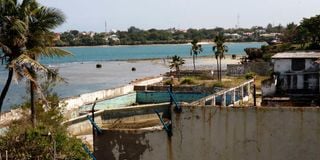
“I was auctioned, that is why I had to relocate my businesses to Nairobi. I had a very big business in Nyali. I owned the Whiteball Lounge, a popular luxury bar and grill in Nyali, which I had to shut down. I had just finished installing a swimming pool when I was forced to close the lounge due to constant harassment from the county government over constant claims of noise and excessive licence fees,” he tells BDLife.
“Mombasa has one of the highest licence fees for entertainment joints. The business could not sustain itself, and before I knew it, I had defaulted on my credit. I had borrowed money with the intention of expanding my business, and the next thing I saw was auctioneers at my door. I lost Sh45 million, the valuation of the business at the time,” he says.
Mr Chacha is among the entertainment entrepreneurs lamenting about the dying nightlife of Mombasa and how it has affected their businesses. They say noise is part of club life, and the county forcing clubs to take the volume a notch lower kills businesses.
“So many times, I was forced to close the club on claims of noise. I mean, it's an entertainment business; besides, there has to be a little bit of noise. Years back, there was no complaint of noise; business was booming. But came in the new administration, and they frustrated club and entertainment joints’ owners over claims of noise pollution. I could no longer do business under those circumstances,” he says.
John Chacha, events promoter and former owner of Whiteball bar and grill Lounge in Nyali, Mombasa
Photo credit: Pool
He is talking about the days of Bora Bora, Salambo, Florida Nightclub, Casablanca , Tiffany’s, Rainbow, Toyz, among others, when noise was what enticed party animals from Kenya and abroad to Mombasa.
Over the years, the clubs that hit in the 80s and 90s died, some due to property owners banning the sale of alcohol and noisy tenants. Others died after the terrorist attacks fueled fear among revelers.
Then the pandemic that came with restrictions made things even worse for the nightlife business.
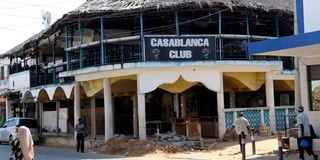
Casablanca Club in Mombasa which is one of the oldest night clubs in Mombasa in this photo taken on September 15, 2025.
Photo credit: File | Nation Media Group
Back then, the streets of Nyali, Bamburi and Old Town throbbed with life. Tourists spilled out of tuk-tuks in their flip-flops, drawn to the promise of late-night beach parties where the ocean breeze mixed with shisha smoke and booming Swahili and reggae beats. Business was thriving too, thanks to the nightlife.
Mombasa was more than a destination; it was a ritual to some and a badge of honour to others. If you had not done a December in Mombasa, you had not lived your best life yet.
These days, Mombasa’s nightlife is just history, sealed like an old mixtape nobody plays anymore.
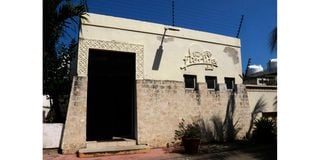
Florida Club, one of the oldest night clubs in Mombasa in this photo taken on September 15, 2025.
Photo credit: File | Nation Media Group
Mr Chacha says even for those who have survived the recent crackdown, running nightlife establishments in Mombasa has become a losing game. Breaking even, let alone making a profit, has become next to impossible. Reason? Licence fees are too high.
“The county raised the licence fees by 100 percent. The rent I used to pay for the lounge was Sh600,000, and if you add all the fees we paid to the county, my monthly bill would come to about Sh800,000 without having factored in other costs of operation,” he says.
Mr Chacha recalls a different time, under former governor Hassan Joho, when the administration encouraged nightlife and entertainment events.
“When Mr Joho was the governor, the industry was vibrant because he had an open-door policy. The events business thrived because he gave it a chance. But after he left, the likes of Tapas, Anuba Lounge closed down...Moonshine, these days, all that is there is silence.
“Who would have thought Anuba Lounge would close down? Everything about it was perfect, its prime location, the parking, it was made to fit. Right now, if you go to Mombasa’s CBD, it’s a ghost town. Almost all nightclubs and entertainment spaces have closed down, and those spaces have been taken up by car showrooms. What’s now left is the irritating noise of a tuk-tuk,” Mr Chacha says.
Economic sense
Dickson Waweru, an event organiser who ran Ring Ring Entertainment in Mombasa for nearly two decades, paints an equally grim picture. He quit the events when it failed to make economic sense.
“Now I am into logistics, and I also run a cleaning company. Organising an event these days in Mombasa is a waste of time and money. After paying all the necessary county fees, which have exorbitantly gone up, the artistes, the technical personnel for stage and sound, to break even is a miracle,” he says.
Mr Waweru says new promoters, mostly DJs, still try to keep the flame alive, but he says their efforts are unsustainable. In its heyday, Mombasa was the training ground of DJs, most of whom were earning good money.
They were the most sought-after, and they had access to the latest music disc supply from ships that came from Italy, France and Germany. But now, even with easy access to music, the DJs are struggling to get well-paying jobs. The same applies to budding artistes who would perform in the many nightclubs.
“I have been doing events in Mombasa for more than 18 years. Look at Mombasa artistes right now, they have no shows, they are hurting. I know of someone who invested millions of shillings in sound and lights, hoping to cash in on the Mombasa entertainment market. Now he is trying to find a buyer for that equipment because no one is booking them.”
Dickson Waweru, an event organiser.
Photo credit: Pool
Defends move
Mohammed Osman Ali, in charge of Mombasa’s Tourism, Culture, and Trade ministry, agrees that nightlife in Mombasa has gone down.
“Right now, there is only one entertainment joint within the CBD, which is not a good picture for us as a tourist destination. The events have also gone down.”
But Mr Ali puts the blame on the Covid pandemic.
“Covid disrupted many things. The flow of people to Mombasa deepened. Before that, we had bad publicity when a German tourist was gunned down (in 2014) if you do recall. That greatly affected our tourist numbers. But in the last six months, things have begun to get better. For example, international airlines have resumed their flights to Mombasa,” he argues.
Defending the county government, Mr Ali argues that the licence fee raises were a necessity.
“I assure that any decision concerning any approved licence fees by the county is arrived at after consultative discussions with the stakeholders. The administration does not blindly sit and decide to come up with new tariffs,” he says.
Disposable income
Besides the licence fees, terror attacks, and the pandemic, critics also point to the diminishing disposable income among residents. They say, for instance, that those who worked at the clearing and forwarding jobs at the port had extra money to spend, but now they don't.
The Standard Gauge Railway (SGR) redirected cargo clearing to Nairobi, and the ripple effects were devastating.
“This was when the rain first started beating us. The flow of cash among Mombasa residents went down. About 90 percent of the clearing and forwarding employees were the partygoers. They had lots of money to spend, and so the entertainment businesses thrived. When these jobs were cut, between 30 to 40 per cent of our revenues were affected,” adds Mr Chacha.
He also adds that corporate brands, which were once central to the coastal party scene, have pulled back their support.
“Companies have also cut costs. They no longer pump millions directly to events as they used to. These days, if you want a brand to come on board, the brand will force you to bring an outlet on board,”
New roads to blame
Erick John, popularly known as Gates Mgenge in Mombasa, a radio host, corporate emcee, and events consultant, points to infrastructure as another culprit.
“The completion of Dongo Kundu and Mariakani-Makueni Highway is also to blame for the dwindling Mombasa nightlife. Now people from Nairobi and other parts of the country no longer need to connect to the South Coast via Mombasa, as it used to be the case. Because of this, we have seen many events shift to Diani and Kilifi,” he says.
Mr John also highlights how Mombasa’s hotels may have inadvertently pulled people away from town clubs.
“Many hotels in Mombasa have also incorporated their own nightlife trends by setting up sorts of clubs and beach bar spaces, with many having live performances and acts. So for the guests, they are left with options of either going out and spending more partying in town nightclubs, or enjoying the entertainment within the facilities of the hotels,” he says.
Party moves to Naivasha
Meanwhile, as Mombasa’s flame dims, other cities are seizing the opportunity. Naivasha has emerged as a festival capital, hosting raves and destination parties that once were Mombasa’s domain.
“Look at towns like Naivasha,” Mr Chacha points out. “It’s emerged as one of those exciting places for party revellers because the county has been actively marketing it. Now I hear talk of people wanting to visit Homa Bay, because the county there is overworking, trying to market it as a destination, with the hotels that have been set up on the coast of Lake Victoria. When was the last time you saw Mombasa County run a commercial campaign to advertise it as a destination?”
Even iconic coastal events like Summer Tides, which once lit up Mombasa’s beaches in its initial days, now prefer Diani in neighbouring Kwale.
Kilifi and Diani are now the main hubs for parties and beach raves once associated with Mombasa.
Mr Ali, the Mombasa County CEC, says: “I totally agree, Mombasa is no longer the party heaven on the Coast, but that doesn’t mean we have nothing to offer.”
“I think we don’t need to compete with our neighbouring counties but complement each other. The tourists we are targeting are all the same. The advantage we have is the airport, so once they land here, there is a product for them,” he adds.
Conferences versus Airbnbs
While Mr Ali is betting on conferences, Mr Chacha has a different observation. He says what is working for Mombasa is the rise of Airbnb, which has disrupted the traditional tourism ecosystem.
“Beach hotels in Mombasa these days struggle for occupancy; you will find most of them empty,” he says.
“I remember when my event company had a partnership with the Reef Hotel. Between August and September, we used to sell 60–70 percent of occupancy ahead of the December Christmas holidays. Moreover, that was the same case across all beach hotels. Nowadays, by November, even selling 40 percent is a problem, because of the competition from Airbnb, which offers more competitive rates and flexibility.”
But Mr Ali is not so worried.
“Things have begun to open up. For instance, connectivity was one of the key factors greatly affected by Covid. However, in the last six months, major international airlines have resumed their direct flights to Mombasa. Turkish Airlines resumes in October, and Qatar Airways is also resuming in a few weeks’ time. We are expecting around 300 tourists next week. For domestic flights, Jambo Jet has been able to increase its frequency. So the return to normalcy has begun.”