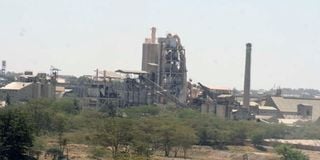
The Consumer Federation of Kenya (Cofek) has filed a lawsuit seeking to stop the National Social Security Fund’s (NSSF) planned sale of its 27 percent stake in East African Portland Cement (EAPC) to Kalahari Cement Limited, a Tanzania-linked firm.
The lobby group warns that the Sh1.6 billion transaction threatens public assets, market competition, and Kenya’s strategic economic interests.
EAPC’s largest shareholder, Kalahari Cement, which is owned by Tanzanian tycoon Edhah Abdallah Munif, is set to hold a 68.7percent controlling stake in the Athi River-based state firm if the deal goes through.
This follows Kalahari’s earlier acquisition of a 29.2 percent shareholding from Swiss firm Holcim’s subsidiaries for Sh718.7 million.
Bamburi Cement Plc, which is fully owned by Mr Munir’s Amsons Group, already holds 12.5 percent of EAPC, further consolidating the Tanzanian conglomerate’s regional dominance.
Cofek alleges the NSSF share disposal is unlawful, accusing the fund and regulators of facilitating a "secretive transaction" involving pension assets without public participation or compliance with constitutional safeguards.
In court filings, Cofek argues the stake—held in trust for Kenyan workers—cannot be transferred without "full transparency, due process, and regulatory scrutiny." The group contends the deal risks ceding control of a historically state-linked manufacturer to foreign interests, undermining Kenya’s industrial sovereignty.
The High Court petition names the Capital Markets Authority (CMA), Competition Authority of Kenya (CAK), NSSF, Kalahari Cement, EAPC, and the Attorney General as respondents.
Cofek claims regulators failed to verify whether the transaction underwent mandatory valuation reviews, capital-markets disclosures, or competition assessments.
Despite repeated requests, CMA and CAK allegedly withheld critical information, violating constitutional rights to access information (Article 35) and fair administrative action (Article 47).
"The intended transaction is poised to result in effective foreign control over EAPC," the petition states, noting Amsons Group’s potential to dominate Kenya’s cement sector.
Cofek warns Kalahari Cement—though locally incorporated—acts as a proxy for its Tanzanian parent, enabling "regulatory circumvention" and anti-competitive consolidation.
The lobby cites Amsons’ aggressive regional expansion as evidence of "credible monopolistic risks" that could allegedly inflate cement prices and harm consumers.
Stephen Mutoro, Cofek’s secretary-general, asserts in court papers that the acquisition process excluded public input, transparent valuations, and competitive bidding.
The petition alleges NSSF and EAPC sidelined minority shareholders’ pre-emptive rights, fast-tracking a "substantial private stake" transfer.
Cofek demands the court compel regulators to disclose all deal documents and conduct compliance audits, arguing the irreversible nature of share transfers makes judicial intervention urgent.
The petition is hinged on Article 10 (transparency), the Public Finance Management Act, and the Capital Markets Act, framing the sale as a test of Kenya’s governance frameworks.
“The sale of public shares without due process,” it argues, “violates the principles of openness, prudence, and responsible financial management.”
The petition faults NSSF and EAPC for allegedly conducting the transaction in secrecy, saying contributors and the public were never given any opportunity to see valuation reports, board approvals, or regulatory filings.
Cofek warns that once the shares are transferred, “the harm will be irreversible,” making it impossible to recover public leverage or forestall potential anti-competitive behaviour.
Previously, it was reported that the sale aims to liquidate underperforming assets, but critics question the timing and beneficiary. EAPC’s Athi River plant sits on 3,000 acres of prime land, and the real value may lie in real estate, not cement.
The court has scheduled a mention for January 27, 2026, to assess respondents’ filings in response to the petitioner’s claims. The respondents are expected to demonstrate that there was rigorous oversight in the contested deal.
Cofek seeks conservatory orders freezing any further steps in the transaction, including sale, transfer, or registration of the NSSF shares in favour of Kalahari Cement.
It is also asking the court to compel the regulators to disclose all documentation relating to the proposed acquisition and to order both CMA and CAK to conduct full compliance and competition assessments.
Cofek argues it has presented a strong case and that maintaining the status quo is necessary to preserve public interest.
“Damages would not be an adequate remedy,” it says, noting that share transfers are irreversible and once control changes hands, “judicial review would be rendered nugatory.”
EAPC’s legacy as a 1933 colonial-era venture (originally owned by Blue Triangle Limited and the Kenyan government) underscores its symbolic and economic significance.
Privatized in the 1990s, the firm has struggled with mismanagement and debt, yet retains assets like the Athi River landbank.
NSSF’s 27 per cent stake, acquired during a 2009 recapitalization, was meant to safeguard workers’ interests—a mandate Cofek argues is now compromised.
Tanzania mandates 51 per cent local ownership in mining and energy, while Kenya’s foreign-investment rules remain ambiguous. Critics argue that such asymmetries disadvantage Kenyan enterprises abroad while exposing critical sectors at home.