Kenya is in talks with India's Adani Group over compensation after the verbal cancellation of a multi-billion-shilling deal to build electricity transmission lines and substations.
The Treasury’s Public-Private Partnership (PPP) Directorate has disclosed that talks are underway for an amicable resolution to the Adani contract issue.
President William Ruto in November last year ordered the cancellation of the 30-year, Sh96 billion public-private partnership deal that an Adani Group firm signed with the Energy ministry to construct power transmission lines.
But Kenya has yet to issue a formal termination notice because it favours the less costly route of mutual separation.
“Termination process is underway, thus the termination costs are yet to be determined,” the PPP unit says in a review of the public-private partnership deals as at June.
Termination is an action initiated by a single party, and in this case, will see Kenya pay Adani Group at least Sh5 billion based on lawyers’ estimates and the size of the deal.
Mutual separation is a negotiated agreement ending the deal inked in October last year, and would see Kenya offer a small payout to cover costs that Adani used in securing the contract.
Under the PPP deal, Adani Energy was to construct two power transmission lines and two substations.
These included a 206km 400kV Gilgil-Thika-Malaa-Konza power transmission line that was to boost power supply around Nairobi. The line was expected to be completed in 2027.
Adani was also to build the 70km 132kV Menengai-Olkalou-Rumuruti transmission line to extend high-voltage power to Olkalou, providing an alternative evacuation path for the Menengai geothermal complex. The line was slated for completion in 2028.
The firm was also expected to build two substations — the 132kV Thurdiburo substation and the 400/220/132kV substation at Rongai — by 2028.
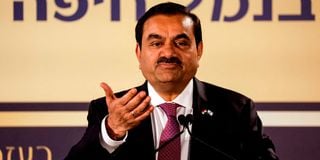
President Ruto ordered the cancellation of the deal after the founder of Adani Group, Gautam Adani, was indicted in the United States.
In November last year, US authorities indicted Mr Adani – one of the richest individuals in the world — and his nephew, Sagar Adani, alleging they paid bribes to secure power supply contracts and misled US investors during fund raises there.
The US financial regulator summoned the duo, alleging they misled investors on compliance during a $750 million Adani Green bond sale.
But the election of President Donald Trump has seen the US soften its stance on pursuing Mr Adani.
Representatives for Mr Adani have since met officials from Trump’s administration to seek dismissal of criminal charges in an overseas bribery investigation, with a resolution possible.
President Trump also paused prosecutions under the Foreign Corrupt Practices Act (FCPA), further weakening Mr Adani’s indictment.
The FCPA was central in the pursuit of the Adanis and President Trump reckons the law is a disadvantage to American businesses competing globally.
The softening US stance and the risk of having to pay a multi-billion-shilling compensation have forced Kenya to seek a negotiated separation and settlement with the Adani Group.
The PPP unit on Thursday declined to disclose the progress of the termination talks, shifting the responsibility to the Kenya Electricity Transmission Company (Ketraco)—the agency that contacted the Adani Group.
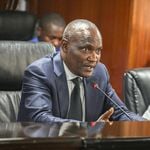
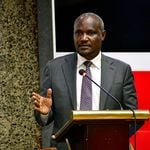
“For Ketraco, kindly reach out to the authority because it is an ongoing process,” Kefa Seda, the director-general of the PPP unit, said in a response to inquiries by the Business Daily.
The Indian conglomerate was expected to generate outsized profits for 30 years before handing over the transmission lines to the Kenyan government. It was to spend Sh96 billion on capital expenditure and expected to generate revenues of Sh634 billion in the 30 years or Sh21.2 billion annually.
The company was going to recoup its investments through a new charge in households’ monthly electricity bills technically called a wheeling charge.
The revenues excluded other expenses like debt, salaries and maintenance costs.
Lawyers reckon that a termination of the Adani deals over mutual separation will see Kenya pay the firms a small share of the Sh96 billion, which is contained in the project agreement to cater for loss of earnings and cost of putting the project together ahead of approval.
Adani could also push for higher compensation, given there are no extraordinary grounds and emergence of new information in the Kenya project to trigger termination, said the lawyers.
Ketraco’s deal with Adani has been marred with concerns over how the public participation was conducted, with IC Law LLP, a city law firm, unsuccessfully pushing to have the names of other firms that bid alongside the Indian company made public.
IC Law also wanted Ketraco to make public details on the financial health of the Adani Energy subsidiary, findings of recommendations from public participation over the deal, and the legal advice that the office of the Attorney-General gave Ketraco on the deal.
President Ruto’s bold decision to order the cancellation of two multi-billion-shilling contracts involving the Adani Group turned the spotlight on a string of botched deals that has seen Kenya pay billions to foreign firms.
In January last year, disclosures by the Roads and Transport ministry revealed that Israeli road construction firm SBI International Holdings Kenya was paid Sh6.19 billion for breaches involving nine contracts awarded under President Uhuru Kenyatta’s administration.
In December 2023, the Treasury had disclosed that the government would pay an additional Sh4.7 billion to two Chinese contractors as part of an out-of-court settlement for the cancellation of a tender to build the second terminal at the Jomo Kenyatta International Airport (JKIA) nine years ago, pushing the total payment to Sh8.9 billion.
In April last year, a Cabinet dispatch indicated that Italian construction company CMC di Ravenna had withdrawn a case in which it had filed at the International Court of Arbitration at The Hague in which it sought Sh12 billion for the termination of contracts to build Itare, Kimwarer and Arror dams.
The government recently agreed to pay French contractors Sh6.2 billion as compensation for the termination of Sh190 billion deal to build the Nairobi and Mau Summit, adding to the taxpayers’ burden of paying for cancelled projects.