Time flies with great content! Renew in to keep enjoying all our premium content.
From HIV to Tobacco: The double standard in public health approaches
Sponsored by Harm Reduction Exchange
Where HIV harm reduction is framed as pragmatic, patient-centred, and evidence-driven, tobacco harm reduction is often framed in absolutist, moralistic terms, ignoring decades of scientific data on reduced-risk products.
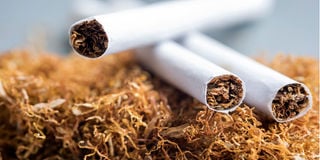
Photo credit: Dhamana
When it comes to HIV, any doctor understands harm reduction strategies such as needle and syringe programs, Opioid Substitution Therapy, Pre-exposure Prophylaxis (PrEP) and Post Exposure Prophylaxis perfectly well.
Not only do they understand the programmes, but they also welcome them since sometimes they are the ones who often use PrEP after dealing with HIV patients.
But when it comes to tobacco, that conversation shifts and takes on a rigidity and strict moral stance. One would say that the stigma associated with smoking from a policy perspective is disproportionate compared to the actual relative harm of different nicotine products.
Where HIV harm reduction is framed as pragmatic, patient-centred, and evidence-driven, tobacco harm reduction is often framed in absolutist, moralistic terms, ignoring decades of scientific data on reduced-risk products.
This no doubt stems from the history of tobacco and the perceived influence of the tobacco industry, which has led regulators and WHO-aligned frameworks to often view any promotion or acceptance of alternative nicotine products as serving industry profits rather than advancing public health.
Somehow, regulators and policymakers are unable to shake off the idea that collaborating with the industry will undermine their credibility in the public eye, despite clear evidence showing that strategic engagement with industry can, in some cases, be the most effective path to public health outcomes.
For this reason, they tend to treat smokers as if any nicotine use is inherently wrong, rather than recognising a spectrum of risk, from combustible cigarettes at the high end to nicotine replacement therapies, snus, or e-cigarettes at the lower end. This contrasts sharply with HIV, where the focus is on mitigating harm rather than moral judgment.
On the sidelines of COP11 being held in Geneva, this stigma in tobacco policy has been a topic of discussion amongst experts. It often manifests as blanket bans on safer alternatives that could reduce smoking-related mortality, funding bias, where resources support anti-smoking campaigns rather than promoting harm-reduction innovation and international guidance rigidity, which can penalise countries exploring harm reduction strategies, unlike the more flexible approaches in HIV prevention.
This has led to a global divergence: EU dissenters like Sweden and the Czech Republic, New Zealand, and Serbia have embraced harm reduction pathways with Members of the European Parliament calling for the adoption of the ‘Swedish way of Harm Reduction’ which has proven to be very successful, while policymakers in SEAR (South-East Asia Region) and WPR (Western Pacific Region) remain slower to adopt such evidence-based approaches, and where Tobacco control programs are often tied to WHO/FCTC compliance.
The challenge with this type of compliance lies in the absence of robust local data on tobacco prevalence, health outcomes, product use patterns, and youth uptake in SEAR. As a result, policymakers are compelled to rely heavily on Western evidence, which creates multiple issues.
In SEAR, smokeless tobacco, such as chewing tobacco, gutkha, and betel quid, is widely used, particularly in India, Bangladesh, Nepal and Sri Lanka. Hand-rolled cigarettes (bidis) and clove cigarettes (kreteks) are common in India and Indonesia. Unlike industrial cigarettes in many Western countries, these products are deeply embedded in local culture.
Imagine adopting a policy that bans traditional ways of smoking as a way to treat non-communicable diseases. It's akin to trying to fork out water from the ocean with a bucket.
To complicate matters, tobacco use, particularly smokeless forms, is normalised across genders and age groups in rural and urban communities, and in some societies, chewing betel quid with tobacco is part of traditional ceremonies or daily social practice. In fact, tobacco is sometimes perceived as a traditional medicine or a stimulant, despite known health risks.
This is why the experts at the Taxpayers Protection Alliance's Good COP 2.0 summit ask the WHO to relax its rigid anti-THR stance, which has consequences beyond Asia-Pacific, as it influences global tobacco control debates and discourages countries from adopting balanced, risk-proportionate regulations.
The double standards for HIV and Tobacco reek of hypocrisy for such a global body and eventually weaken public health outcomes where harm reduction could save lives.
Experts, of course, acknowledge the problem that beleaguers the WHO when it comes to Tobacco, which is child access, and are in no way in support of this. However, Sweden appears to have managed this challenge effectively through its harm reduction approach. There is no reason why this model of success cannot be replicated globally with minimal risk to children.