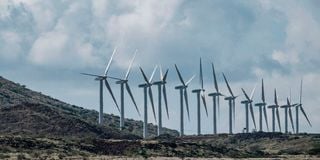
Electricity generation reached a new record high in August 2025, reflecting a surge in demand from homes, businesses, and industries.
Data by the Energy and Petroleum Regulatory Authority (Epra) show that the units generated and purchased locally hit 1,291.39 million kilowatt-hours (kWh) during the month, the highest ever recorded in the country’s history.
The August electricity output marked a growth from 1,284.28 million kWh in the prior month. This came in the wake of Kenya Power's record sale of 1,090.88 million kWh in June.
Records by the Kenya National Bureau of Statistics show Kenya Power's monthly sales crossed 1,000 million kWh for the first time in May.
Power producers, such as the Kenya Electricity Generating Company (KenGen), are therefore stepping up production to match consumption.
Rising industrial activity and household connectivity have placed pressure on the national grid, pushing power producers to ramp up supply.
Energy-intensive sectors such as manufacturing, transport, and construction have stepped up their operations, leading to increased consumption.
The race to hook more consumers to the grid through initiatives such as rural electrification programmes and the extension of last-mile connectivity projects has led to increased consumption amid outcry about the cost and reliability of the power.
Hydropower, geothermal, wind, and solar — Kenya’s main sources of generation — have all played a part in meeting the rising consumption. The country continues to rely heavily on renewable energy, with geothermal and hydropower plants leading output.
The increased demand has cut the country’s reserve margin—the level of unused available capacity of an electric power system— to four percent, making the grid more vulnerable to power cuts.
The country has had to increase electricity imports from neighbouring countries such as Ethiopia in the face of rising consumption, even as Kenya Power warned that the thinning extra capacity on the grid could result in power rationing.
The country’s peak demand—the highest load on the electricity grid over the year, typically occurring between 7:30 p.m. and 8.30 p.m. nationwide— has been rising over the past five years, hitting 2,177 MW in the year ended June 2024 from 2,149 MW a year earlier. The peak demand stood at 1,926 MW five years ago.
In the six months ended December last year, KenGen accounted for 59.94 percent of the 7,7177.61 GWh of electricity generated, followed by imports (10.48 percent), Lake Turkana Wind Power (10.24 percent), and Orpower (5.78 percent).
Kenya Power has been warning of power rationing following the freeze on new power purchase agreements (PPAs) that have stopped building new generation plants.
The freeze, which has been in place for over four years, has meant that Kenya Power cannot enter into new PPAs or renew the ones that expire.
The embargo started in 2021 as part of the outcome of the now-retired President Uhuru Kenyatta-backed task force that was formed to review current PPAs and recommend a strategy for reducing the cost of electricity.
The Cabinet lifted the freeze in March 2023, but Parliament declined to approve the decision. MPs demanded an explanation from the Energy ministry on how it would protect consumers against steep charges by independent power producers.