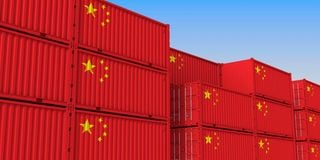
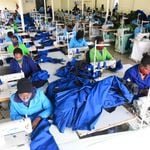
Kenya stands on the cusp of a remarkable opportunity in its economic partnership with China. For years, Beijing has been one of Nairobi’s most significant trading partners, a key financier of infrastructure projects, and an enabler of industrial transformation.
While the trade balance has long tilted in China’s favour, largely due to Kenya’s heavy importation of machinery, construction materials, and manufactured goods, the story is not one of inequality but of potential.
Now, with China having announced preferential tariff treatment for African countries, including Kenya, there is a genuine chance to turn this long-standing relationship into a more balanced and mutually beneficial partnership.
Recent figures from the Kenya National Bureau of Statistics (KNBS) show that China’s trade surplus with Kenya rose to about Sh295 billion in the first half of 2025. Imports from China reached over Sh304 billion, while exports from Kenya fell to just under Sh9 billion.
On the surface, these numbers appear worrying. Yet they also reflect Kenya’s continued reliance on Chinese technology, which has powered much of the country’s modernisation, from the standard gauge railway to digital connectivity and industrial development.
The challenge now is not to limit imports but to expand exports, turning the relationship from one of dependency into reciprocity.
China’s recent announcement of preferential tariff treatment for African countries, which includes a wide range of Kenyan products, offers a timely and transformative solution.
Under this initiative, key agricultural exports such as tea, coffee, avocados, and cut flowers will enjoy duty-free access to the Chinese market. For a nation whose economy still draws strength from agriculture, this development is more than a diplomatic gesture—it is an open invitation to scale up production, improve quality, and tap into one of the largest consumer markets in the world.
The Chinese market is not only vast but increasingly sophisticated.
A growing middle class is demanding premium, organic, and ethically sourced products. Kenyan goods enjoy a strong reputation globally for their purity and quality, making this a natural match. With tariff barriers lifted, Kenyan exporters now have a direct path to reach consumers who value authenticity and sustainability.
To fully benefit, however, Kenya must prepare for this new phase. Tariff removal alone will not guarantee export growth. The country must enhance production capacity, maintain strict quality standards, and ensure compliance with China’s import requirements.
This means investing in agricultural technology, farmer training, and product certification. It also requires efficient logistics—from cold storage to transport—to meet international standards.
Kenyan exporters should see China not just as a distant market but as a partner in improving standards and competitiveness.
Equally vital is the need to move beyond raw exports. For decades, Kenya’s export basket has been dominated by unprocessed goods that fetch lower global prices. The time has come to shift toward value-added products—blended teas, roasted coffee, processed avocado oil, and branded macadamia snacks.
Exporting finished products would allow Kenya to capture more value domestically, create jobs, and strengthen rural industries. China’s own journey from a raw material exporter to a manufacturing powerhouse offers valuable lessons Kenya can adapt to its local context.
There is also immense potential for deeper industrial cooperation. Rather than viewing Chinese imports as competition, Kenya can see them as catalysts for growth.
Joint ventures between Chinese and Kenyan enterprises could facilitate technology transfer, enhance skills, and boost productivity.
Collaboration in agro-processing, light manufacturing, and e-commerce could open new markets. Digital platforms such as Alibaba and JD.com already provide avenues for African goods to reach Chinese consumers directly. Kenya should leverage these to promote its agricultural and craft products to a fast-growing, quality-conscious audience.
Infrastructure remains central to export success. Thanks to China’s partnership through the Belt and Road Initiative, Kenya now enjoys modern ports, railways, and highways that can support expanded trade.
The next step is to refine logistics by improving customs efficiency, expanding cold-chain capacity, and streamlining cargo handling at ports and airports. These upgrades will make exports more competitive and reliable.
Policy alignment is equally crucial. Kenya must accelerate its Integrated National Export Development and Promotion Strategy, emphasizing diversification and product quality.
Establishing permanent trade offices in Chinese cities such as Guangzhou, Hunan, and Fujian could help exporters understand market trends and build lasting partnerships. These efforts would convert diplomatic goodwill into measurable economic progress.
It is important to recognise that China’s preferential tariff treatment reflects a spirit of partnership, not charity. It embodies Beijing’s vision of shared growth with Africa—an understanding that mutual prosperity benefits both sides. A stronger Kenyan export sector complements China’s interest in stable, growing African economies.
This gesture of openness underscores China’s long-term commitment to cooperation and balanced development.
Kenya must seize this moment. The widening trade deficit should not be seen as a weakness but as a call to action—to produce more, innovate more, and trade smarter.
By embracing value addition, fostering industrial collaboration, and aligning policy with opportunity, Kenya can bridge the trade gap not through confrontation but through cooperation.
China has extended a hand of partnership; it is now up to Kenya to grasp it firmly. With strategic investment, discipline, and creativity, this preferential tariff treatment could mark the beginning of a new era—one where trade between Kenya and China reflects not imbalance, but shared progress, mutual respect, and lasting prosperity.
The writer is a journalist and communications consultant.
Unlock a world of exclusive content today!Unlock a world of exclusive content today!