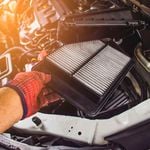
I have a classic car that, of course, has a petrol engine. Can I convert it to greener EV power but preserve the original character and appearance? Vincent
Technically, almost anything is possible,and by now there will be specialists offering ‘drop-in’ EV conversion kits for some makes and models. The external appearance of a classic car can almost certainly be preserved, but your dearly-beloved old friend will sound and handle like a stranger.
The core question is not ‘if’ this can be done…it is ‘why?’ The term ‘drop-in’ might make it sound simple, but the process is sssoooo much more complicated than replacing a power unit that runs on petrol with a power unit that runs on electricity. Virtually every part of the car will need some adjustment. The cost of a minimal conversion is probably at least Sh2 million and up to Sh10 million.
The process starts by removing (throwing away?) the old engine and its block, the injector/carburettor, the fuel lines, filters and pump, the inlet manifold, the exhaust manifold and the whole exhaust system including the cat converter, silencers and tailpipe and all their brackets, the alternator, the starter motor, the engine mountings, the fuel tank, the radiator, coolant pipes and water pump, and (optionally) the gearbox, driveshaft(s) and differential(s).
And even the parts you keep will often require substantial modification.
Your brake servo will be converted to an electronic booster. Your springs and dampers and their mountings, and perhaps even chassis members, bushes and other mountings will have to be upgraded to cope with extra weight. The EV batteries you put in will weigh 10 times more than the one you take out, and require ten times as much space…variously scrounged in the engine compartment, under the back seat, in the boot, and under the floor (in a special cage where the fuel tank or spare wheel used to be).
Drop-in might be slightly less misleading if there is a specific kit for exactly the make, model and year of the car you are converting. ‘Classic’ cars are by nature rare and diverse, but some exist in quite significant numbers and, if conversion to EV becomes common practice, the ‘drop-in’ experts will have researched the parts, lay-out and processes for retrofitting them. The new bits you will put in will be sized and shaped to fit most rationally into the exact space and shape of things you will take out, and what needs to be done and where to fabricate or reinforce body mods will be known.
But if your classic is a one-off to the specialists (or your own diy itch) every aspect will have to be invented and tailored.
So again I would ask, ‘why would anyone do this?’ The question has of course been posed all over the world ever since the EV concept became a likely requirement. And both manufacturers and related entrepreneurs have analysed the answers, some of which are rational, some emotional and some…technically mistaken.
The top four reasons cited, all with some Eco loyalty addendum, are to ‘preserve classics’ (like the 1965 Mustang, the original Land-Rover, the Porsche 356, the VW Camper, the E-type Jaguar, the Alfa Spider) in a legally useable form, to generally beat the ban deadlines in advance, to duck some of the non-essential modern technology which EVs ‘add’, to reduce maintenance bills, and as a hobby passion with a steep learning curve. Others include improved performance while preserving classic quality, to recycling instead of dumping, fun to do, and making muscle cars and pick-ups quieter.
Most of us will at least understand some of those motives (even if we do not share them), as personal, expressive and part of a life story. But there must be serious doubts about the logic of others. Spending millions to reduce maintenance bills sounds more like an alcohol overdose than arithmetic; EV conversion might preserve classic appearance, but assuredly not classic quality (which includes, sounds and smells and character authenticity), and recycling is an odd term for throwing away half-a-ton of functional equipment.
And those touting drop-in miracles might forget to mention the possibility that ‘classic’ cars, as an ever-diminishing minority, might be exempted. I would be very surprised if they were not. If you wonder whether petrol stations might disappear altogether, ask me again…in about 30 years’ time.
On the underlying Eco aspect of all this, let us all emphatically agree that anything and everything that can be done to reduce damage done by 8 billion human beings to Planet Earth and its atmosphere deserves our attention and action. But we also simultaneously need to develop our ability to distinguish between marketing/political guff and real life, including holistic science. Even very loud and repetitive shouts of ‘a good thing’ are not proof. The result is. And impartial science is a better predictor than advertising.
Unlock a world of exclusive content today!Unlock a world of exclusive content today!