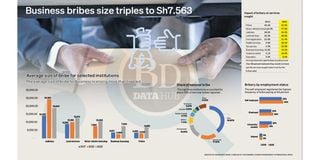
The average bribe size at the Judiciary was the largest at Sh18,800, but has fallen from Sh24,381 reported in 2019.
Bribes for land services grew 24 percent to Sh12,610 in the period under review, while those for car licensing grew 38 percent to Sh10,466.
The survey indicated that the self-employed had the highest frequency of bribe paying at 48 percent.
“The self-employed category registered the highest frequency of bribe paying at 48 percent. This ranking tallies with the previous survey in 2019 where the same category topped, albeit with a slightly lower magnitude of 45 percent,” the survey notes.
“This could be explained by the probable higher interactions with such services like business licensing and law enforcement.”
The police, Judiciary and land services have been identified as the most bribery-prone institutions over the last three surveys.
Bribery continues to be an impending barrier to effective public service delivery due to unofficial and illegal payments as a precondition to access services.
As a result, government efforts to improve the quality of life of average Kenyans are thwarted while the goal of poverty eradication remains futile.
The study is from a survey of 1,000 respondents across 15 select counties and outlines experiences and perceptions on bribery practices in service delivery.
The campaign group, Transparency International, reckons people rarely report bribery and corruption in Kenya because they feel no action will be taken.
In 2013, former President Uhuru Kenyatta launched a website for people to report incidents of corruption directly to him.
Users can upload videos, photos and other documents and can choose from a long drop-down list of government departments to complain about.
Little action emerged from the whistle blowing site.